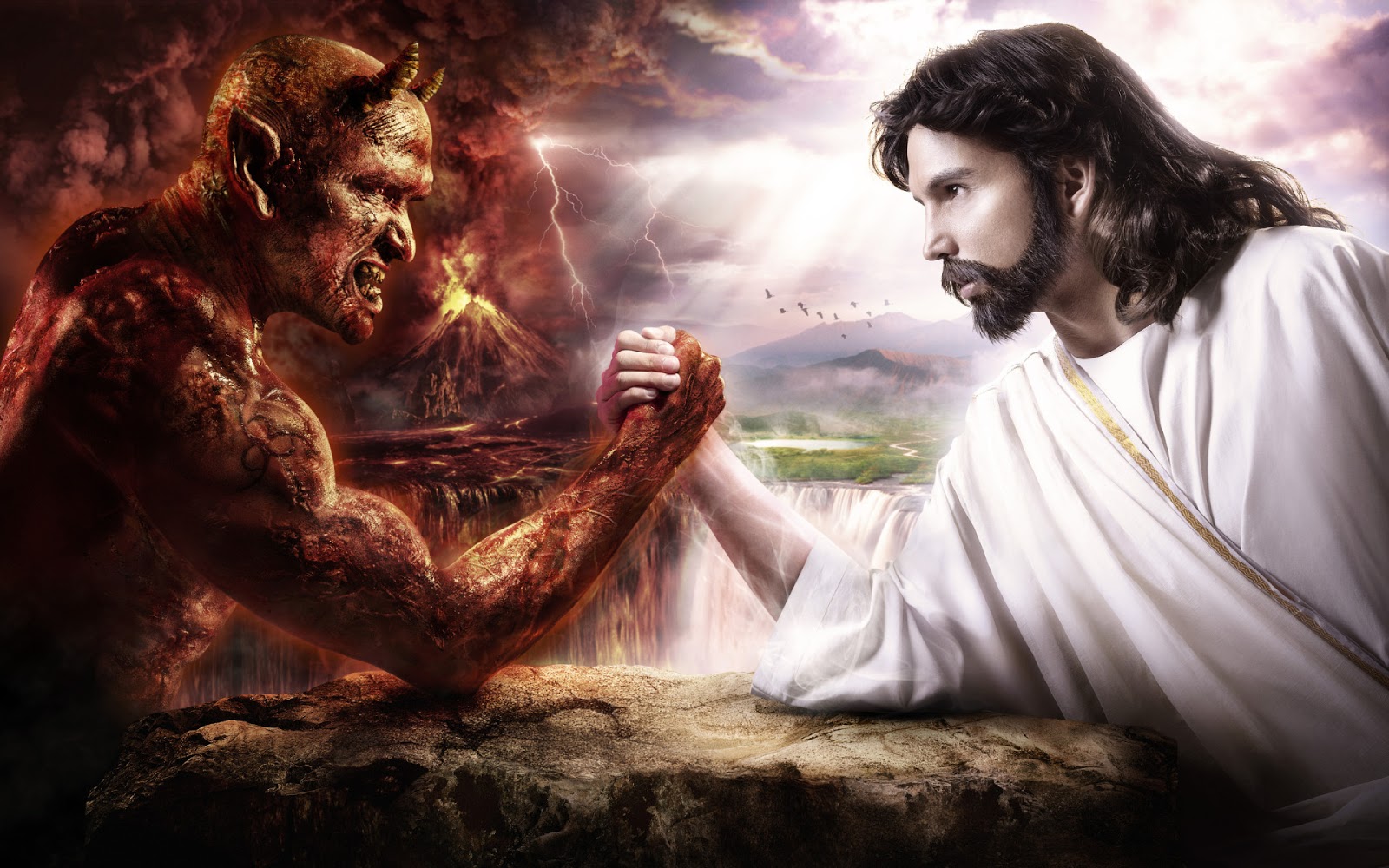
GOD ON OUR SIDE?


All US Politicians are obligated in most Christian America to end their speeches with ‘God Bless America!’ President Biden limits that to ‘God Bless OUR Troops!’

The US is the biggest ARMS MERCHANT in the History of Nations, and US Christian Leaders remain BLIND and OBLIVIOUS to this Vision in their Bibles, “‘Not by Military Force, and not by physical strength, but by my Spirit’ says the Lord of Hosts. Mirroring the US government, there are more weapons in private hands than for any other People on Earth reserved unto that Day of Judgment when they will be used by Americans against Americans

Bob Dylan, Masters of War, and the Ukraine Crisis

Red-white-and-blue chauvinism is running wild. Yet there are real diplomatic alternatives to the collision course for war

Fifty-nine years ago, Bob Dylan recorded “With God on Our Side.” You probably haven’t heard it on the radio for a very long time, if ever, but right now you could listen to it as his most evergreen of topical songs:

Oh, my name, it ain’t nothin’, my age, it means less
The country I come from is called the Midwest
I’s taught and brought up there, the laws to abide
And that the land that I live in has God on its side

Oh, the history books tell it, they tell it so well
The cavalries charged, the Indians fell
The cavalries charged, the Indians died
Oh, the country was young with God on its side

The Spanish-American War had its day
And the Civil War too was soon laid away
And the names of the heroes I was made to memorize
With guns in their hands and God on their side

The First World War, boys, it came and it went
The reason for fightin’ I never did get
But I learned to accept it, accept it with pride
For you don’t count the dead when God’s on your side

The Second World War came to an end
We forgave the Germans, and then we were friends
Though they murdered six million, in the ovens they fried
The Germans now too have God on their side

I learned to hate the Russians all through my whole life
If another war comes, it’s them we must fight
To hate them and fear them, to run and to hide
And accept it all bravely with God on my side

But now we’ve got weapons of chemical dust
If fire them we’re forced to, then fire them we must
One push of the button and they shot the world wide
And you never ask questions when God’s on your side

Through many dark hour I been thinkin’ about this
That Jesus Christ was betrayed by a kiss
But I can’t think for you, you’ll have to decide
Whether Judas Iscariot had God on his side

So now as I’m leavin’, I’m weary as hell
The confusion I’m feelin’ ain’t no tongue can tell
The words fill my head, and they fall to the floor
That if God’s on our side, he’ll stop the next war

In recent days, media coverage of a possible summit between Joe Biden and Vladimir Putin has taken on almost wistful qualities, as though the horsemen of the apocalypse are already out of the barn.

Fatalism is easy for the laptop warriors and blow-dried studio pundits who keep insisting on the need to get tough with “the Russians,” by which they mean the Russian government. Actual people who suffer and die in war easily become faraway abstractions. “And you never ask questions / When God’s on your side.”

During the last six decades, the religiosity of U.S. militarism has faded into a more generalized set of assumptions—shared, in the current crisis, across traditional political spectrums. Ignorance about NATO’s history feeds into the good vs. evil bromides that are so easy to ingest and internalize.

On Capitol Hill, it’s hard to find a single member of Congress willing to call NATO what it has long been: an alliance for war (Kosovo, Afghanistan, Libya) with virtually nothing to do with “defense” other than the defense of vast weapons sales and, at times, even fantasies of regime change in Russia.

The reverence and adulation gushing from the Capitol and corporate media (including NPR and PBS) toward NATO and its U.S. leadership are wonders of thinly veiled jingoism. About other societies, reviled ones, we would hear labels like “propaganda.” Here the supposed truisms are laundered and flat-ironed as common sense.

Glimmers of inconvenient truth have flickered only rarely in mainstream U.S. media outlets, while a bit more likely in Europe. “Biden has said repeatedly that the U.S. is open to diplomacy with Russia, but on the issue that Moscow has most emphasized—NATO enlargement—there has been no American diplomacy at all,” Jeffrey Sachs wrote in the Financial Times as this week began. “Putin has repeatedly demanded that the U.S. forswear NATO’s enlargement into Ukraine, while Biden has repeatedly asserted that membership of the alliance is Ukraine’s choice.”

As Sachs noted, “Many insist that NATO enlargement is not the real issue for Putin and that he wants to recreate the Russian empire, pure and simple. Everything else, including NATO enlargement, they claim, is a mere distraction. This is utterly mistaken. Russia has adamantly opposed NATO expansion towards the east for 30 years, first under Boris Yeltsin and now Putin…. Neither the U.S. nor Russia wants the other’s military on their doorstep. Pledging no NATO enlargement is not appeasement. It does not cede Ukrainian territory. It does not undermine Ukraine’s sovereignty.”

Whether or not they know much about such history, American media elites and members of Congress don’t seem to care about it. Red-white-and-blue chauvinism is running wild. Yet there are real diplomatic alternatives to the collision course for war.

Speaking Monday on Democracy Now!, Katrina vanden Heuvel—editorial director of The Nation and a longtime Russia expert—said that implementing the Minsk accords could be a path toward peace in Ukraine. Also, she pointed out, “there is talk now not just of the NATO issue, which is so key, but also a new security architecture in Europe.”

Desperately needed is a new European security framework, to demilitarize and defuse conflicts between Russia and U.S. allies. But the same approach that for three decades pushed to expand NATO to Russia’s borders is now gung-ho to keep upping the ante, no matter how much doing so increases the chances of a direct clash between the world’s two nuclear-weapons superpowers.

The last U.S. ambassador to the Soviet Union before it collapsed, Jack Matlock, wrote last week: “Since President Putin’s major demand is an assurance that NATO will take no further members, and specifically not Ukraine or Georgia, obviously there would have been no basis for the present crisis if there had been no expansion of the alliance following the end of the Cold War, or if the expansion had occurred in harmony with building a security structure in Europe that included Russia.”

But excluding Russia from security structures, while encircling it with armed-to-the-teeth adversaries, was a clear goal of NATO’s expansion. Less obvious was the realized goal of turning Eastern European nations into customers for vast arms sales.

A gripping chapter in “The Spoils of War,” a new book by Andrew Cockburn, spells out the mega-corporate zeal behind the massive campaigns to expand NATO beginning in the 1990s. Huge Pentagon contractors like Lockheed Martin were downcast about the dissolution of the USSR and feared that military sales would keep slumping. But there were some potential big new markets on the horizon.

“One especially promising market was among the former members of the defunct Warsaw Pact,” Cockburn wrote. “Were they to join NATO, they would be natural customers for products such as the F-16 fighter that Lockheed had inherited from General Dynamics. There was one minor impediment: the [George H. W.] Bush administration had already promised Moscow that NATO would not move east, a pledge that was part of the settlement ending the Cold War.”

By the time legendary foreign-policy sage George F. Kennan issued his unequivocal warning in 1997—“expanding NATO would be the most fateful error of American policy in the post-Cold War era”—the expansion was already happening.

As Cockburn notes, “By 2014, the 12 new members had purchased close to $17 billion worth of American weapons.”

If you think those weapons transactions were about keeping up with the Russians, you’ve been trusting way too much U.S. corporate media. “As of late 2020,” Cockburn’s book explains, NATO’s collective military spending “had hit $1.03 trillion, or roughly 20 times Russia’s military budget.”

Let’s leave the last words here to Bob Dylan, from another song that isn’t on radio playlists. “Masters of War.”

Let me ask you one question
Is your money that good?
Will it buy you forgiveness
Do you think that it could?

HAVE WE ARRIVED AT ARMAGEDDON/WWIII?


Time is flying! I was surprised and held in Wonder, AWE, and Rapture unexpectedly being BORN AGAIN on February 1, 1975 when I was 31, a babe in starting to learn the ways of the Christ Spirit. I start my 82nd Year Wednesday, May 21 and my Personal Faith is stronger than ever.

Valley of Decision

As a World Citizen, Child of God at 77, and a Canadian, I sent the same Message to all 100 Senators November 5,8,15 &16, not as Representatives of Local Parochial interests, but as National and International Leaders, but giving NOTICE of the US-Russian WAR over Ukraine in NATO that started 2 months later.

AMERICA’S BUSINESS IS WAR


‘Not by military force and not by physical strength, but by My spirit,’ says the Lord of Hosts.

He shall judge between the nations and reprove many peoples, and they shall beat their swords into plow shares and their spears into pruning hooks; nation shall not lift the sword against nation, neither shall they learn war anymore.

The Pentagon as Pentagod

W.J. Astore

The other day, retired General Michael Flynn called for “one religion under God” in the United States.

Ah, General Flynn, we already have one religion of militant nationalism and imperialism, and we already have one god, the Pentagod, which is the subject of my latest article for TomDispatch.com.

First, one religion. This weekend I watched the New England Patriots play the Cleveland Brown during which a Pentagon recruiting commercial broke out. The coaches wore camouflage jackets and caps, the game started with military flyovers of combat jets, and there even was a mass military swearing-in ceremony hosted by a four-star general and admiral. That same general claimed during an on-field interview during the game that the military is what keeps America free, which might just be the best definition of militarism that I’ve heard.

(Aside: In a true democracy, the military is seen as a necessary evil, because all militaries are essentially undemocratic. The goal of a true democracy is to spend as little as possible on the military while still providing for a robust defense.)

Here’s an illustration, sent by a friend, of America’s one religion:

So, according to the NFL and the mainstream media, “all of us” need to honor “our” military and indeed anyone who’s ever worn a uniform, no questions asked, apparently. I wore a military uniform for 24 years: four years as a cadet, twenty as a military officer, and I’m telling you this is nonsense — dangerous nonsense. Don’t “salute” authority. Question it. Challenge it. Hold it accountable and responsible. At the very least, be informed about it. And don’t mix sports, which is both business and entertainment, with military service and the machinery of war.

OK, so now let’s talk about America’s god. As I argue below, it certainly isn’t the Jesus Christ I learned about by reading the New Testament and studying the Gospels in CCD. America has never worshipped that god. Clearly the god we worship — at least as measured by money and societal influence — is the Pentagod, which leads me to my latest article at TomDispatch. Enjoy!

The Pentagon As Pentagod

Who is America’s god? The Christian god of the beatitudes, the one who healed the sick, helped the poor, and preached love of neighbor? Not in these (dis)United States. In the Pledge of Allegiance, we speak proudly of One Nation under God, but in the aggregate, this country doesn’t serve or worship Jesus Christ, or Allah, or any other god of justice and mercy. In truth, the deity America believes in is the five-sided one headquartered in Arlington, Virginia.

In God We Trust is on all our coins. But, again, which god? The one of “turn the other cheek”? The one who found his disciples among society’s outcasts? The one who wanted nothing to do with moneychangers or swords? As Joe Biden might say, give me a break.

America’s true god is a deity of wrath, whose keenest followers profit mightily from war and see such gains as virtuous, while its most militant disciples, a crew of losing generals and failed Washington officials, routinely employ murderous violence across the globe. It contains multitudes, its name is legion, but if this deity must have one name, citing a need for some restraint, let it be known as the Pentagod.

Yes, the Pentagon is America’s true god. Consider that the Biden administration requested a whopping $753 billion for military spending in fiscal year 2022 even as the Afghan War was cratering. Consider that the House Armed Services Committee then boosted that blockbuster budget to $778 billion in September. Twenty-five billion dollars extra for “defense,” hardly debated, easily passed, with strong bipartisan support in Congress. How else, if not religious belief, to explain this, despite the Pentagod’s prodigal $8 trillion wars over the last two decades that ended so disastrously? How else to account for future budget projections showing that all-American deity getting another $8 trillion or so over the next decade, even as the political parties fight like rabid dogs over roughly 15% of that figure for much-needed domestic improvements?

Paraphrasing Joe Biden, show me your budget and I’ll tell you what you worship. In that context, there can’t be the slightest doubt: America worships its Pentagod and the weapons and wars that feed it.

Prefabricated War, Made in the U.S.A.

I confess that I’m floored by this simple fact: for two decades in which “forever war” has served as an apt descriptor of America’s true state of the union, the Pentagod has failed to deliver on any of its promises. Iraq and Afghanistan? Just the most obvious of a series of war-on-terror quagmires and failures galore.

That ultimate deity can’t even pass a simple financial audit to account for what it does with those endless funds shoved its way, yet our representatives in Washington keep doing so by the trillions. Spectacular failure after spectacular failure and yet that all-American god just rolls on, seemingly unstoppable, unquenchable, rarely questioned, never penalized, always on top.

Talk about blind faith!

Yet, before I bled Air Force blue, before I was stationed in a cathedral of military power under who knows how many tons of solid granite, I was raised a Roman Catholic. Recently, I caught the words of Pope Francis, God’s representative on earth for Catholic believers. Among other entreaties, he asked “in the name of God” for “arms manufacturers and dealers to completely stop their activity, because it foments violence and war, it contributes to those awful geopolitical games which cost millions of lives displaced and millions dead.”

Which country has the most arms manufacturers? Which routinely and proudly leads the world in weapons exports? And which spends more on wars and weaponry than any other, with hardly a challenge from Congress or a demurral from the mainstream media?

And as I stared into the abyss created by those questions, who stared back at me but, of course, the Pentagod.

How Congress Loots the Treasury for the Military-Industrial-Congressional Complex

Even as it loses war after war overseas, the U.S. military has waged a far more successful one to burnish its image in the hearts and minds of Americans and win every budget battle in Washington.

Despite a disagreement over some amendments in the Senate, the United States Congress is poised to pass a $778 billion military budget bill for 2022. As they have been doing year after year, our elected officials are preparing to hand the lion’s share—over 65%—of federal discretionary spending to the U.S. war machine, even as they wring their hands over spending a mere quarter of that amount on the Build Back Better Act.

The U.S. military’s incredible record of systematic failure—most recently its final trouncing by the Taliban after twenty years of death, destruction and lies in Afghanistan—cries out for a top-to-bottom review of its dominant role in U.S. foreign policy and a radical reassessment of its proper place in Congress’s budget priorities.

Instead, year after year, members of Congress hand over the largest share of our nation’s resources to this corrupt institution, with minimal scrutiny and no apparent fear of accountability when it comes to their own reelection. Members of Congress still see it as a “safe” political call to carelessly whip out their rubber-stamps and vote for however many hundreds of billions in funding Pentagon and arms industry lobbyists have persuaded the Armed Services Committees they should cough up. 

Let’s make no mistake about this: Congress’s choice to keep investing in a massive, ineffective and absurdly expensive war machine has nothing to do with “national security” as most people understand it, or “defense” as the dictionary defines it. 

U.S. society does face critical threats to our security, including the climate crisis, systemic racism, erosion of voting rights, gun violence, grave inequalities and the corporate hijacking of political power. But one problem we fortunately do not have is the threat of attack or invasion by a rampant global aggressor or, in fact, by any other country at all. 

Maintaining a war machine that outspends the 12 or 13 next largest militaries in the world combined actually makes us less safe, as each new administration inherits the delusion that the United States’ overwhelmingly destructive military power can, and therefore should, be used to confront any perceived challenge to U.S. interests anywhere in the world—even when there is clearly no military solution and when many of the underlying problems were caused by past misapplications of U.S. military power in the first place.

While the international challenges we face in this century require a genuine commitment to international cooperation and diplomacy, Congress allocates only $58 billion, less than 10 percent of the Pentagon budget, to the diplomatic corps of our government: the State Department. Even worse, both Democratic and Republican administrations keep filling top diplomatic posts with officials indoctrinated and steeped in policies of war and coercion, with scant experience and meager skills in the peaceful diplomacy we so desperately need. 

This only perpetuates a failed foreign policy based on false choices between economic sanctions that UN officials have compared to medieval sieges, coups that destabilize countries and regions for decades, and wars and bombing campaigns that kill millions of people and leave cities in rubble, like Mosul in Iraq and Raqqa in Syria.

The end of the Cold War was a golden opportunity for the United States to reduce its forces and military budget to match its legitimate defense needs. The American public naturally expected and hoped for a “Peace Dividend,” and even veteran Pentagon officials told the Senate Budget Committee in 1991 that military spending could safely be cut by 50% over the next ten years.    

But no such cut happened. U.S. officials instead set out to exploit the post-Cold War “Power Dividend,” a huge military imbalance in favor of the United States, by developing rationales for using military force more freely and widely around the world. During the transition to the new Clinton administration, Madeleine Albright famously asked Chair of the Joint Chiefs of Staff General Colin Powell, “What’s the point of having this superb military you’re always talking about if we can’t use it?”

In 1999, as Secretary of State under President Clinton, Albright got her wish, running roughshod over the UN Charter with an illegal war to carve out an independent Kosovo from the ruins of Yugoslavia. 

The UN Charter clearly prohibits the threat or use of military force except in cases of self-defense or when the UN Security Council takes military action “to maintain or restore international peace and security.” This was neither. When U.K. Foreign Secretary Robin Cook told Albright his government was “having trouble with our lawyers” over NATO’s illegal war plan, Albright crassly told him to “get new lawyers.” 

Twenty-two years later, Kosovo is the third-poorest country in Europe (after Moldova and post-coup Ukraine) and its independence is still not recognized by 96 countries. Hashim Thaçi, Albright’s hand-picked main ally in Kosovo and later its president, is awaiting trial in an international court at the Hague, charged with murdering at least 300 civilians under cover of NATO bombing in 1999 to extract and sell their internal organs on the international transplant market.

Clinton and Albright’s gruesome and illegal war set the precedent for more illegal U.S. wars in Afghanistan, Iraq, Libya, Syria and elsewhere, with equally devastating and horrific results. But America’s failed wars have not led Congress or successive administrations to seriously rethink the U.S. decision to rely on illegal threats and uses of military force to project U.S. power all over the world, nor have they reined in the trillions of dollars invested in these imperial ambitions. 

Instead, in the upside-down world of institutionally corrupt U.S. politics, a generation of failed and pointlessly destructive wars have had the perverse effect of normalizing even more expensive military budgets than during the Cold War, and reducing congressional debate to questions of how many more of each useless weapons system they should force U.S. taxpayers to foot the bill for.       

It seems that no amount of killing, torture, mass destruction or lives ruined in the real world can shake the militaristic delusions of America’s political class, as long as the “Military-Industrial-Congressional Complex” (President Eisenhower’s original wording) is reaping the benefits. 

Today, most political and media references to the Military-Industrial Complex refer only to the arms industry as a self-serving corporate interest group on a par with Wall Street, Big Pharma or the fossil fuel industry. But in his Farewell Address, Eisenhower explicitly pointed to, not just the arms industry, but the “conjunction of an immense military establishment and a large arms industry.”

Eisenhower was just as worried about the anti-democratic impact of the military as the arms industry. Weeks before his Farewell Address, he told his senior advisors, “God help this country when somebody sits in this chair who doesn’t know the military as well as I do.” His fears have been realized in every subsequent presidency.

According to Milton Eisenhower, the president’s brother, who helped him draft his Farewell Address, Ike also wanted to talk about the “revolving door.” Early drafts of his speech referred to “a permanent, war-based industry,” with “flag and general officers retiring at an early age to take positions in the war-based industrial complex, shaping its decisions and guiding the direction of its tremendous thrust.” He wanted to warn that steps must be taken to “insure that the ‘merchants of death’ do not come to dictate national policy.” 

As Eisenhower feared, the careers of figures like Generals Austin and Mattis now span all branches of the corrupt MIC conglomerate: commanding invasion and occupation forces in Afghanistan and Iraq; then donning suits and ties to sell weapons to new generals who served under them as majors and colonels; and finally re-emerging from the same revolving door as cabinet members at the apex of American politics and government.

So why does the Pentagon brass get a free pass, even as Americans feel increasingly conflicted about the arms industry? After all, it is the military that actually uses all these weapons to kill people and wreak havoc in other countries. 

Even as it loses war after war overseas, the U.S. military has waged a far more successful one to burnish its image in the hearts and minds of Americans and win every budget battle in Washington. 

The complicity of Congress, the third leg of the stool in Eisenhower’s original formulation, turns the annual battle of the budget into the “cakewalk” that the war in Iraq was supposed to be, with no accountability for lost wars, war crimes, civilian massacres, cost overruns or the dysfunctional military leadership that presides over it all. 

There is no congressional debate over the economic impact on America or the geopolitical consequences for the world of uncritically rubber-stamping huge investments in powerful weapons that will sooner or later be used to kill our neighbors and smash their countries, as they have for the past 22 years and far too often throughout our history.

If the public is ever to have any impact on this dysfunctional and deadly money-go-round, we must learn to see through the fog of propaganda that masks self-serving corruption behind red, white and blue bunting, and allows the military brass to cynically exploit the public’s natural respect for brave young men and women who are ready to risk their lives to defend our country. In the Crimean War, the Russians called British troops “lions led by donkeys.” That is an accurate description of today’s U.S. military.  

Sixty years after Eisenhower’s Farewell Address, exactly as he predicted, the “weight of this combination” of corrupt generals and admirals, the profitable “merchants of death” whose goods they peddle, and the Senators and Representatives who blindly entrust them with trillions of dollars of the public’s money, constitute the full flowering of President Eisenhower’s greatest fears for our country.

Eisenhower concluded, “Only an alert and knowledgeable citizenry can compel the proper meshing of the huge industrial and military machinery of defense with our peaceful methods and goals.” That clarion call echoes through the decades and should unite Americans in every form of democratic organizing and movement building, from elections to education and advocacy to mass protests, to finally reject and dispel the “unwarranted influence” of the Military-Industrial-Congressional Complex.