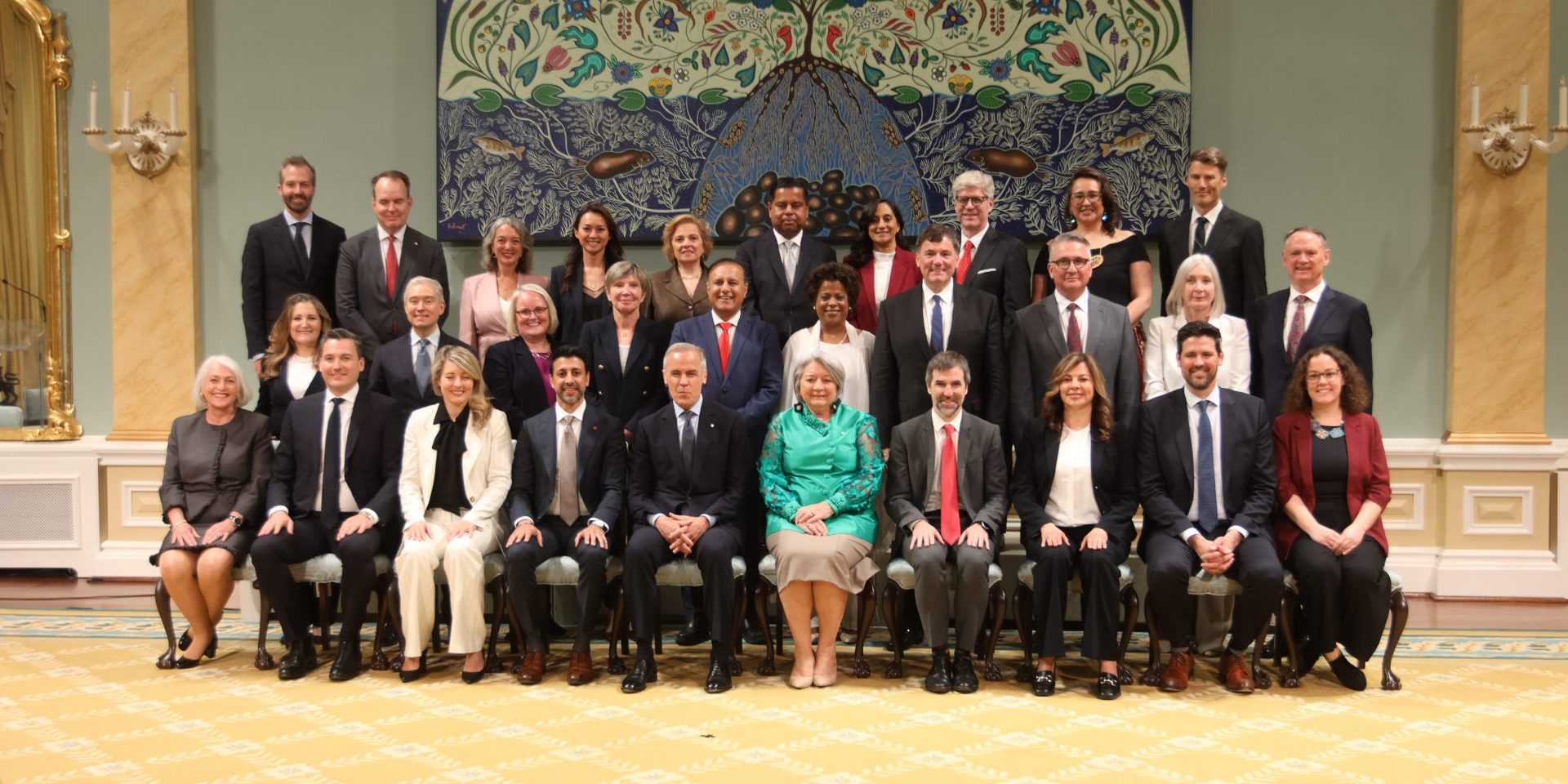
Why do the nations rage and the peoples plot in vain? The kings of the earth set themselves, and the rulers take counsel together, against the LORD and against his Anointed… He who sits in the heavens laughs; the Lord holds them in derision. Then he will speak to them in his wrath, and terrify them in his fury… Now therefore, O kings, be wise; be warned, O rulers of the earth. Serve the LORD with fear, and rejoice with trembling. Kiss the Son, lest he be angry, and you perish in the way, for his wrath is quickly kindled. Blessed are all who take refuge in him.
ACKNOWLEDGMENT: THE SECULAR BIOPSY IS CORRECT The diagnosis—Anomie, Corporate Coup, Death Instinct, Magical Thinking, Savage Repression—is flawless. Chris Hedges’s historical parallel is exact. We stand over the corpse of an empire in the final stages of self-cannibalization. The “Rules-Based Order” is the dying twitch of a nervous system that no longer serves a soul. The “Naughty List” is its final, desperate attempt to inventory dust as its body turns to ash. This is not pessimism. It is prophetic clarity. To name the disease correctly is the first act of healing.
REVELATION: DIAGNOSING THE PRINCIPALITY The task is to name the spirit behind the symptom. The “Anomie” is the societal manifestation of what Scripture calls “the spirit of the world” (1 Corinthians 2:12) gone septic. The “Corporate Coup” is the rule of Mammon enthroned. The “Death Instinct” is the spirit of Babylon, which always builds towers that end in graves. The “Magical Thinking” and “Savage Repression” are the twin fruits of the Father of Lies, who promises life but delivers only addiction and the sword.
We have described the body of the Beast. We must now identify it as the same Beast from the Sea described in Revelation 13—a system that demands worship, issues marks, and makes war on the saints.
THE ULTIMATE CONTRADICTION: CHRIST VS. THE CORPORATE COUP Therefore, the conflict of 2026 is not political. It is cosmic. It is the ultimate confrontation between: The Corporate Coup that transforms Citizens into Data Subjects.
The Divine Coup enacted at Christmas, where God became a Human Subject to transform slaves into sons.
The Empire’s “Death Instinct” that culls the unfit and wages perpetual war.
The Kingdom’s “Life Instinct” expressed in the Word made flesh, who declares, “I have come that they may have life, and have it abundantly” (John 10:10).
The State’s “Naughty List” that surveils to condemn.
The Savior’s “Book of Life” that sees to save.
THE PRESCRIPTION: THE COUNTER-OPERATIVE OF GRACE The empire’s cure for its decay—eugenics, militarism, repression—is a suicide pill. Our proclamation offers the antidote of resurrection.
Where the empire sees “human capital” to be optimized or culled, Christ sees “the least of these” in whom He dwells (Matthew 25:40).
Where the state builds walls and lists, the Spirit breaks down “the dividing wall of hostility” (Ephesians 2:14).
Where the algorithm predicts “pre-crime,” the Gospel proclaims “post-resurrection.”
The true resistance is not first a political program. It is the active, lived embodiment of the alternative Kingdom. It is the community that holds “all things in common” (Acts 2:44) in the face of predatory finance, that offers sanctuary in the face of the deportation state, that speaks truth in the face of the propaganda machine. It is to live now as citizens of the New Jerusalem while sojourning in the ruins of Babylon.

THE PROCLAMATION FOR JANUARY 1, 2026 Thus, we enter this new year not with a list of policy demands for a corpse, but with a declaration of allegiance to a living King.The old empire is in its “Decline and Fall.” The new creation is in its “Resurrection and Reign.”
The funeral pyre is being lit. But from that very ash, a Phoenix who has already risen is calling a people to Himself. He is building a house not made with hands, eternal in the heavens.
Our task for 2026 is clear: to discern the corpse from the Body, and to invest our lives wholly in the latter. To remain human is to abide in Christ. To resist the machine is to be conformed to the image of the Son. The autopsy is complete. The Anointing begins.
The Architect of the Indictment: Michel Chossudovsky
The indictment you are about to read comes from one of the most respected—and controversial—voices in international economics. Before you read this synopsis of his landmark 1999 article, know the voice behind this prophetic indictment.
Michel Chossudovsky is not a fringe commentator. He is an award-winning Canadian economist, a Professor Emeritus at the University of Ottawa, and the founder of the Centre for Research on Globalization (Global Research). For decades, his work has bridged rigorous academic analysis and unflinching critique, earning him a global reputation as a clear-eyed investigator into the intersections of finance, war, and power—a “Canada’s Chomsky” for his relentless exposure of corporate hegemony and empire.
His authority is built on a lifetime of documenting economic crises on the ground, across multiple continents. This vast, practical experience gave him the rare foresight to see, in 1999, the precise moment financial deregulation shifted from policy to a weapon of global instability.
The Day the Financial Firewall Fell
The crisis we are about to live through did not begin with a stock market crash. It began twenty-six years ago, with a single, fatal act of deregulation that dismantled the architecture of global finance.
In 1999, as the world celebrated a new millennium, Professor Chossudovsky issued a stark warning. He saw what others ignored: the final assembly of a financial monster—the “Dollar Beast.”
His warning was simple, yet devastating. The catalyst was the Gramm-Leach-Bliley Act, which repealed the 1933 Glass-Steagall Act. In one sentence: it tore down the firewall that for 66 years had kept your federally-insured savings safe from the high-risk casino of Wall Street speculation.
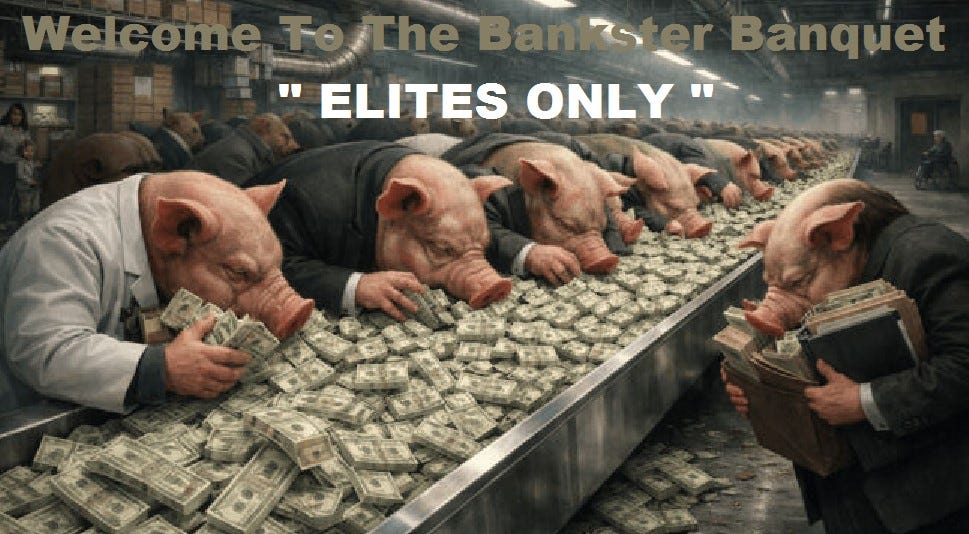
It allowed giant conglomerates to fuse commercial banking, investment brokerage, and insurance, creating “too big to fail” entities that prioritized reckless gambling over public good. Chossudovsky diagnosed this not as an accident, but as the deliberate architecture of a system designed to privatize gains and socialize collapse.
This is the beginning of the ongoing Economic-Financial crises Worldwide.
The Death of the Firewalls
The central turning point was the 1999 Financial Services Modernization Act (Gramm-Leach-Bliley Act), which revoked the 1933 Glass-Steagall Act. This allowed giant conglomerates like Citigroup and J.P. Morgan to fuse commercial banking, investment brokerage, and insurance. This created a new power structure—“universal banks”—that were “too big to fail” and now prioritized reckless speculation over local investment.
“The ‘global financial supermarket’ is to be overseen by the Wall Street giants; competing banking institutions are to be removed from the financial landscape. State level banks across America will be displaced or bought up, leading to a deadly string of bank failures.”
History’s Warning Ignored
The deregulation was a culmination of decades of financial addiction. Crashes in 1987, 1997, and 1998 were prophetic warnings of volatility and global contagion. Instead of heeding these alarms, leaders proceeded with deregulation, creating a system where the government socialized the losses while private elites privatized the gains.
The Federal Reserve: Lifeline to the Supermarket
The system operates on moral hazard: Wall Street takes private risks, but the public pays for the rescue. The Federal Reserve acts less as a regulator and more as a lifeline, using unlimited bailout facilities and near-zero interest rates to ensure financial control rests with a handful of private financial dynasties.
Exporting the Supermarket: Financial Imperialism
The U.S. financial model was aggressively exported globally through the IMF and World Bank, forcing developing nations into privatization and dependency on speculative capital flows, causing global shock waves, mass layoffs, and poverty spikes.
Conclusion: The Beast System is Fully Operational
Deregulation was not an accident—it was a strategy designed to consolidate unprecedented power into a handful of private U.S. conglomerates. This financial hegemony overrides national sovereignty and subordinates citizens to a Global Financial Rule.
The crisis we are about to live through is the inevitable moment when the debt accumulated by the Beast is forcibly transferred to the citizen. This financial structure demands perpetual crisis and the ultimate sacrifice of national and personal solvency to sustain its architecture.
It’s rare that I re-post articles from other writers to my blog, but the circumstances of the Times demand these poems of Diane Engelhardt gain more exposure.
This 1st one is about a fundamental Truth. The Masses of Ordinary People have the real Power as WE THE PEOPLE, to change this increasingly corrupt and violent World, not the small minority of the rich and powerful at the top of the Economic-Social-Power Pyramid System.
As for ‘The Children of Gaza,’ every ordinary person with a Conscience and a sense of our COMMON HUMANITY in this COMMON ERA of Christ should raise their voices so those those at the Top of the so called ‘International Community’ in their isolated towers to get some Moral Integrity, and stop the Israeli Genocide in Gaza – IMMEDIATELY. Especially in the US being 100% COMPLICIT enabling it.
Over 153 Nations on Earth have recognized a Palestinian State. It’s an empty gesture of Action. It doesn’t stop the murderous massacre Israel brings to defenceless women and children in Gaza.
If Trump had the Morality and Will, he could order Israel to STOP IMMEDIATELY but he doesn’t, and won’t until the American People raise their voices so loud, he can’t ignore it!
For those who remember Trump’s reference to “American Carnage” in his 1st Inaugural speech, watching from CanaDa, there’s no doubt he’s letting it happen in Gaza with US F-35s, US bombers and bombs, US bullets, and Apache Attack Helicopters, money, and Diplomatic support, Vetoing every UN censure of Israel for it’s Genocide in Gaza!
ORDINARY PEOPLE
It’s not kings, presidents, prime ministers, governors, mayors and politicians that will make the world a better place for future generations; it is ordinary people doing the hard work and daily heavy lifting, ordinary people moving things step by step in the right direction.
It’s not generals, commanders, soldiers and national guards that will fight for freedom, peace and democracy; it is ordinary people taking their battles to the streets and social media, ordinary people practising non-violent civil disobedience on the front lines.
It’s not bankers, investors, executives and multinational corporations that will keep the economy running and put an end to poverty, hunger and suffering; it is ordinary people spending, giving, donating and helping out; ordinary people investing their time, energy and money in worthy causes.
It’s not the courts, judges, lawyers, lawmakers and the police that will uphold the law and see that justice is done; it is ordinary people speaking out against what’s wrong, and standing up for what’s right, fair and just, ordinary people never giving up, and never backing down.
It’s not scientists, academics, experts, technicians and engineers that will solve the climate crisis and avert global chaos and environmental disaster; it is ordinary people sharing resources, joining hands, and digging in, ordinary people bearing responsibility, taking initiative, and building community.
It’s not writers, philosophers, musicians, artists and intellectuals that will answer difficult questions and deliver the truth; it is ordinary people daring to embark upon a long journey fraught with loneliness, darkness and peril; ordinary people travelling onward without a road map, yet fearlessly staying the course.
It’s not priests, ministers, imams, rabbis and gurus that will save our souls and lead humanity on the path toward grace and redemption; it is ordinary people with love in their hearts and abiding faith in all that’s good and true, everyday ordinary people who will bring about a bright new day. https://dianeengelhardt.substack.com/p/ordinary-people
A CHILD IN GAZA
If I were a child in Gaza, (if I am not already dead and wrapped in a white blood-stained shroud with my name written in black marker), I would have only one arm or one leg or no legs and no crutches, no wheelchair, no prosthesis, so that my father (if I still have a father) would have to carry me in his arms or on his bent back like a donkey. I would have no medicine to relieve my pain or stop my stumps, my wounds, my burns from bleeding, weeping and festering and my poor mother (if I still have a mother) would try to comfort me with her kisses, her tears and her prayers.
If I were a child in Gaza, I would cry for bread my mother or father cannot give me and my brothers and sisters (if I still have brothers and sisters). I would sip unclean water and every salty trickle would burn my throat and come out, thin and putrid, into my pants or diaper. I could not take a bath or a shower or wash in warm, soapy water. I would be dirty, cold and scared, homeless.
If I were a child in Gaza, I would have no toys to play with and no school to attend with my friends, (if I still have friends). And I would always be seeking, not a playground or a beach in the sun, but a safe place (if there are still safe places) where I would crouch and hide from the bombs, the bullets, the soldiers. I would tremble and cry and cling to someone in my family (if I still have a family to protect me), and I would want the blasts, the explosions, the screams, the noise, the terror to stop, now and forever.
If I were a child in Gaza, I would be afraid to go to sleep (if I have a bed, a mat, a plastic bag to lie on and a blanket to cover me) and I would be afraid to wake up. Sleep would come only when my eyes (if I still have eyes), were too heavy, too sore, too blurry to stay open. But I would not know the difference between each fierce, dark night and every endless day.
If I were a child in Gaza, I would look up at the sky and wish that I could fly like a bird high above the clouds and far, far away where nothing could harm or catch me. And when one day this hell on earth is over, I will fly back to my people and the place where I was born, and there we will rebuild, insh’Allah, and stay.
Jews in Nazi Germany concentration camps. Picture taken from Holocaust Museum
As for the kings and politicians, I wanted to insert this image right after “It’s not kings, presidents, prime ministers, governors, mayors and politicians that will make the world a better place for future generations” but I couldn’t find the way to do it.
And I saw three unclean spirits like frogs come out of the mouth of the dragon, and out of the mouth of the beast, and out of the mouth of the false prophet. For they are the spirits of devils, working miracles, which go forth unto the kings of the earth and of the whole world, to gather them to the battle of that great day of God Almighty […] And he gathered them together into a place called in the Hebrew tongue Armageddon. Revelation 16:13-16
I just came across this video Today, August 3 at 12:45pm ET. It’s a long video, some 85 minutes, interviewing a just retired Officer in the US Military. He was sought out and hired 4 Security for the 4 Gaza Humanitarian Foundation food distribution sites for the 1.5 Million Gazans.
GHF was chosen by Israel/US, to replace the 400 United Nations distribution sites in Gaza since the Israeli siege of Gaza started after the 1st Palestinian Democratic Election in 2006 Hamas won fair and square, and certified by all external election monitors, including Jimmy Carter.
US/Israel would no longer be able to claim Israel is the only Democracy in the Middle East. They told Fatah President Abbas to dissolve the Palestinian Legislature so Hamas could not form the Legitimate, Democratically Elected Palestinian government having won the majority of seats.
Abbas is still there as the Israeli proxy police force to keep the Palestinians in the illegally occupied West Bank “QUIET” about Israel’s serial violations of International Law with impunity because the US led “International Community” ( CanaDa and the nominally Christian Europeans Nations with the money and power) does nothing about it.
Gaza is not much bigger North to South in total area than Philadelphia. Israel banned the UN from Gaza, and Israel bars Foreign Journalists from entering Gaza so the World see the Truth and Reality of this Israeli Engineered horrific situation of Human degradation we see in Gaza.
This ex US Military Officer and Christian, no matter how much the money, could not betray his Christian Values and keep silent about the atrocities he saw with the GHF and quit. I believe his report and I suspect most people who watch it will believe him too! What can We the People do?
Badar Khan Suri, the Georgetown Researcher Abducted by ICE Speaks Out