TODAY is my Birthday! Thirty-nine years have gone by since that unexpected, Wonder Filled Day when I was ‘Born Again” by the Spirit of God February 1, 1975. I was 29 going on 30, and never experienced anything like it before.
That Day, I came alive to God and/or God came alive in me. Before that unexpected Day I was like most people, never thinking about God. There was no time or room for God in Life, my thoughts, my calculations and questioning of Life and the systems of THIS world. Why it is the way it is?
Before I was resurrected from the spiritually dead, I anticipated going no further than the grave and turning to dust, ceasing to exist in the expanse of Eternity. That would be Eternal Darkness and Damnation!
In 1968 when I was 24, before The Faith came to me, my annual pay package, with a non taxable company car and expense account benefits to experience Fine Dining in Fine Restaurants, was $25,000. That bought me the stuff and lifestyle requiring $165,000 in Today’s Dollars. It was a very good Year!
I don’t make $25,000 in Today’s Dollars, but in my own estimation, relatively speaking, and all circumstances considered, I am doing better than ever before, having found a Peace of Mind, Joy, and Satisfaction in Life I could not have imagined in 1968.
February 1, 1975, I was lifted up to a much higher plane, dimension and perspective in looking at myself in this world, and everything in it. It was the 1st Day of a Life Long Journey of Discovery with no turning back. I describe what happened to me that Day here, without exaggeration or embellishment of the Truth.
It does take a lot of TIME, PATIENCE and TRUST within our 30 second byte Society where the people want everything now, to Spiritually mature and be able to declare unequivocally to the world, “Christ is come in my Flesh.” This I do here!
Beloved, believe not every spirit, but try the spirits whether they are of God: because many false prophets are gone out into the world.
Hereby you know the Spirit of God: Every spirit that confesses that Jesus Christ is come in the flesh is of God:
And every spirit that does not confess that Jesus Christ is come in the flesh is not of God: and this is that spirit of Antichrist, whereof you have heard that it should come; and even now already is it in the world.
With all the Red Lines being drawn everywhere for so many reasons all over the world these days, this is one more, signifying the Final Phase in the War between the Spirit of Christ and Antichrist.
Therefore rejoice, you heavens, and you that dwell in them. Woe to the inhabitants of the earth and of the sea! for the devil is come down unto you, having great wrath, because he knows that he has but a short time.
Revelation 12:12
These words of Christ are in the Book for a reason,
Nevertheless when the Son of man comes, shall he find faith on the earth?
THE LORD IS MY SHEPHERD. I shall not want!
Jesus answered and said to him, Truly, truly, I say to you, Except a man be born again, he cannot see the kingdom of God. Nicodemus said to him, How can a man be born when he is old? can he enter the second time into his mother’s womb, and be born? Jesus answered, Truly, truly, I say to you, Except a man be born of water and of the Spirit, he cannot enter into the kingdom of God. That which is born of the flesh is flesh; and that which is born of the Spirit is spirit. Marvel not that I said to you, You must be born again. The wind blows where it will, and you hear the sound of it, but can not tell from where it comes, and where it goes: so is every one that is born of the Spirit.
Nicodemus answered and said to him, How can these things be? Jesus answered and said unto him, Are you a master of Israel, and know not these things?
But as many as received him, to them HE GAVE POWER TO BECOME THE SONS of God, even to them that believe on his name: Which were born, not of blood, nor of the will of the flesh, nor of the will of man, but of God.
My flesh body came into this world on May 21, 1944 in the last year of WWII. If it is True what they say, that ‘Life Begins at 40,’ I am looking forward to next Year. This picture was taken Today to mark the occasion of still being a ‘Child of God’ in my 70th year going on 40.
……to be continued
p.s.
I have always been curious about History, especially with the turn of a page, Caesar, the Emperor of Rome disappeared, and the Pope of Rome reappeared in his place, wearing different vestments, but with the same Imperial powers.
For 1000 years, the Church of Rome controlled the thinking of the People from the pulpit. The People did not have access to the Bible to question or challenge the Absolute Authority of the Church.
Except for the challenge of Islam rising up in the Middle East at a Time when the Church of Rome, having exercised Power in the Name of Christ for almost 350 years, perverted and inverted all the Principles and teachings of Christ in their application of power, the Church had no opposition in Europe.
What the Church did to Europeans with the Inquisition, and to the Jews and Muslims with the Crusades, was as much a crime against humanity as the worst of what the Islamic terrorists and other powers do Today. There was no challenge to the Church Dictatorship in Europe until The Gutenberg Bible was printed in the 1450s.
Finally, the Bible was being disseminated to the General Public of Europe, and for the 1st Time, the People could compare the words and the actions of the Ruling Authority of the Church and see for themselves, how they conflicted with the recorded teachings of Christ.
The Biblical Babylon, (ancient Iraq) is the 1st recorded example of an Imperial economic-military Superpower, dictating to, and controlling the lessor kingdoms. The concept of Imperial Power from ancient Babylon, and it’s changing Face with the subsequent Economic-Military Superpowers throughout the Ages, is carried over from the Old Testament to the New Testament, to the End of the Age, if not the End of the world.
The US is the late, great Power to wear that Imperial Mantle in the Biblical pattern and mould of the Babylonian system of things.
The tail did strike the head in 2003, setting in motion the ongoing series of events leading to the end of the Babylonian Economic-Military System described in Revelation 18.
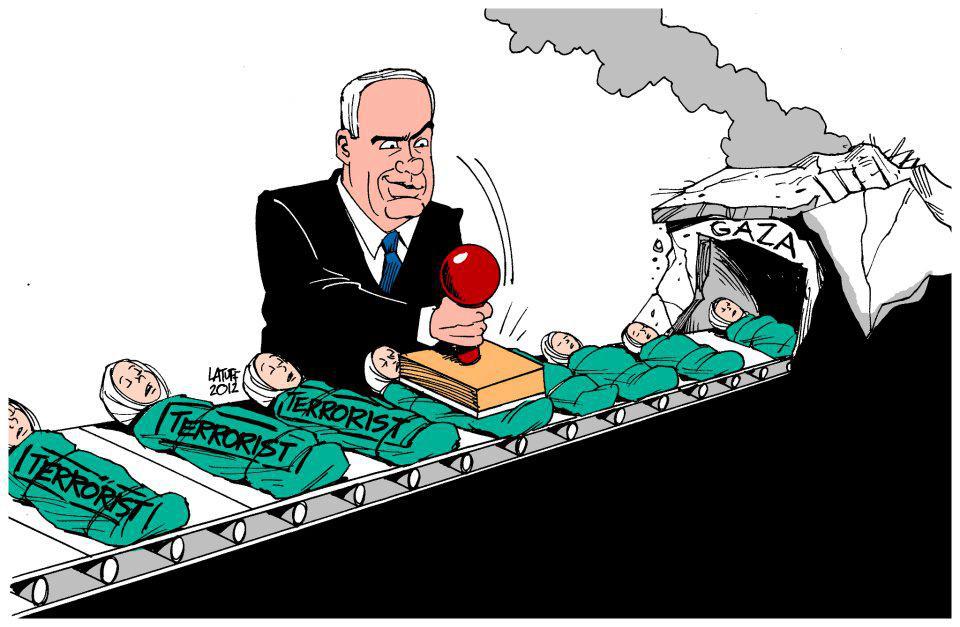
The following article is re-posted from the Blog of Professor Richard Falk, UN Special Rapporteur for Palestinian Rights under Israeli Military Occupation. I selected and included all the images.
Richard Falk is a recognized International law and International Relations Scholar who taught at Princeton University for forty years. Since 2002 he has lived in Santa Barbara, California, and taught at the local campus of the University of California in Global and International Studies and since 2005 chaired the Board of the Nuclear Age Peace Foundation.
Professor Falk is Jewish and the Jew Israelis love to hate for pointing out Israeli violations of International Law and UN Resolutions.
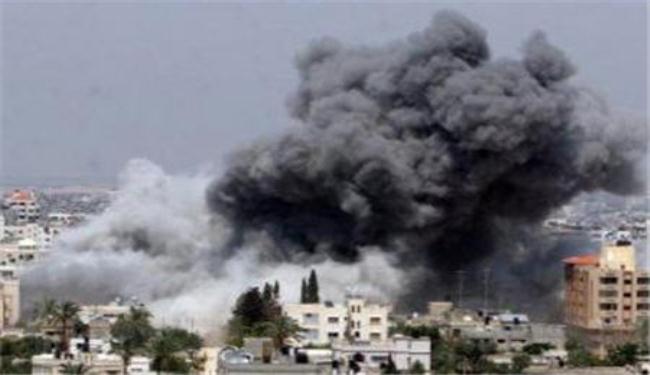
I renamed Professor Falk’s article to ‘Am I my Brother’s Keeper’ when it was posted in November, 2013. I did not foresee the Israeli government would launch Operation Brother’s Keeper in July 2014 leading to the massive bombardment and destruction of the infrastructure, homes and businesses in Gaza in the summer of 2014 during Operation Protective Edge.
The total economic war Israel is currently waging against the entire population of Gaza is beginning to take it’s terrible toll. Innocent civilians, not just the minority fighters resisting Israeli displacement of Palestinians from the land they occupied before the recreation of temporal Israel from the Bible after an absence of 3000 years, and the Jewish settlement expansion on the very land that is the purpose of Peace Negotiations, is part of Israeli policy regarding Palestinians. In effect, the Israeli position is; resistance is futile, but Palestinians will not be assimilated into Eretz Israel They have no Democratic Rights in the “Jewish” State expanding on Palestinian land.
Statement by Abba Eban, Israeli Foreign Minister, June 14, 1967. “Wars are not always begun by shots. They are often begun by action and the action which really created the state of war in an acute sense was the imposition of the blockade. To try to murder somebody by strangulation is just as much attempted murder as if you tried to murder him by a shot, and therefore the act of strangulation was the first violent, physical act which had its part in the sequence.”
People are people everywhere. The ordinary people of Gaza have the same material needs and feelings Jews did when Egypt imposed a partial economic blockade on Israeli shipping passing through the Strait of Tiran prior to Israel starting the military hostilities beyond words in the 1967 War.
This material below was distributed by John Whitbeck, distinguished American lawyer and author, living in Paris,and doing his best to keep a group concerned with world affairs informed about latest developments, especially inthe Middle East. I also add a slightly edited text of a message sent by Robert Stiver from Hawaii, who has exhibited consistent empathy for the suffering of the Palestinian people.My press release below, although far less emotional than the cri de coeur that Robert Stiver wrote, issues from the same place of urgent concern for the brave and resolute people of Gaza. I hope that Robert is wrong however when he ends with self-tormenting words of despair: “What to do, in the name of common justice? I know not; it seems useless, all useless.” Such feelings of futility are quite understandable, but let us do all within our power to make sure that this unfolding catastrophe ENDS before its full tragic character is totally realized.
It hardly needs to be observed that the silence of the United Nations and the global media is a continuing disgrace, particularly given the pomp and circumstance of those mighty statesmen who self-righteously proclaim a new doctrine: ‘the responsibility to protect’ (R2P) those whose survival and dignity is at stake due to crimes of state or as a result of natural catastrophe.
Cutting edge Middle East news analysis edited by Oliver Miles
Web Arab News Digest
Gaza: a disgraceAccording to a BBC report military action in Gaza between Israel and Hamas has been limited since the serious fighting a year ago in which about 170 Palestinians and six Israelis died. But tension remains high, as also between Hamas and Egypt where northern Sinai has been the scene of much fighting. Meanwhile living conditions for 1.7 million Gazans remain atrocious.Reuters reports that Turkey has pledged $850,000, $200,000 of which have already reached Gaza, to alleviate the fuel crisis which has closed Gaza’s only power station and a major sewage treatment plant, so that raw sewage is running in the streets. Fuel deliveries by the UN have started, and are reported to be promised by Qatar. The immediate cause of the fuel crisis is the destruction by Egypt of cross-border tunnels, and the longer term cause the Israeli blockade.We thank John Whitbeck for an “Action Alert” from the Friends of Al-Aqsa (a UK NGO) drawing attention to the first item below, a UN report on action needed to avert a humanitarian crisis. He comments that the Action Alert refers to the “smuggling” of fuel and other basic necessities into Gaza through tunnels on the border between Egypt and Palestine. ‘This terminology is standard media usage in Israel and the West, intended to semantically criminalize the victims, but, as a matter of both law and common sense, I believe that the use of the word “smuggle” is totally inappropriate in these circumstances. “Smuggling” is an illegal activity, usually involving a violation of the laws of the importing state. Under whose applicable laws is importing basic necessities into Gaza illegal? Certainly not the laws of the importing state, Palestine, or the current de facto government of Gaza, as to which Israel insists that it has not been the occupying power (and, accordingly, has had no responsibilities or obligations) since it withdrew its illegal settlers, locked the gates and, effectively, threw away the keys. If there is an Egyptian law banning the export of basic necessities from Egypt, I am not aware of it. The provisioning of Gaza with the basic necessities of life should be characterized as humanitarian relief, those who prevent Gazans from receiving the basic necessities of life should be characterized as criminals and those who are aware of the situation and fail to speak out should be characterized as moral bankrupts.’The second item below is a report published by Al Jazeera on the impact of Israeli drones over Gaza, particularly on children. The author is a British journalist resident in Nazareth, Israel.Gaza fuel crisis: UN expert calls for urgent action to avert a humanitarian catastrophe
GENEVA (26 November 2013) – United Nations Special Rapporteur Richard Falk today called for urgent action to address the power shortage in occupied Palestine that has left 1.7 million residents of the Gaza Strip in a dire situation. More than three weeks after the only power plant shut down due to a critical fuel shortage, power supply has been limited to six hours a day.
“The situation in Gaza is at a point of near catastrophe,” warned the independent expert charged by the UN Human Rights Council to monitor and report on the situation of human rights in the Palestinian territories occupied since 1967.
“The fuel shortage and power cuts have undermined an already precarious infrastructure, severely disrupting the provision of basic services, including health, water and sanitation,” he said. “The onset of winter is certain to make things even worse.”
Less than half of Gaza’s total power needs are being met and disruptions to specialized health services, such as kidney dialysis, operating theatres, blood banks, intensive care units and incubators are putting the lives of vulnerable patients in Gaza at risk.
Mr. Falk highlighted the plight of patients in Gaza unable to seek affordable specialized medical treatment in Egypt as a result of Egypt’s closure of the Rafah crossing in recent weeks. “The Israeli authorities have been more forthcoming in issuing permits to Gazans in need of urgent specialized treatment, but the high cost of medical treatment in Israel places it beyond the reach of most Gazans,” he noted.
For the past two weeks, approximately 3000 residents, including children, living in or near the Gazan neighbourhood of Az Zeitoun have been wading through raw sewage on the streets after the largest sewage treatment facility in area overflowed due to a power failure.
The Special Rapporteur stressed that other sewage treatment stations may soon also run out of petrol to fuel generators and result in more sewage overflowing onto the streets of Gaza. Medical experts have warned of the serious risk of disease, and even an epidemic
“Up to 40 per cent of Gaza’s population receives water only once every three days,” he noted. “In this situation of dire necessity those who can afford to do so, are shockingly buying unsafe water from unregulated water vendors and distributors.”
The human rights expert believes that the main trigger for the latest crisis is Egypt’s ongoing crackdown on the vast network of tunnels and fuel tanks near the southern border of Gaza, which allowed Gaza to avoid some of the hardships associated with the Israeli blockade maintained since 2007.
“We mustn’t forget that the underlying cause of a lack of adequate medical facilities and specialized care in Gaza is a consequence of Israel’s illegal blockade,” Mr. Falk said.
The Special Rapporteur explained that, under present conditions, Israel has a special responsibility under international humanitarian law to take whatever measures are necessary to protect the civilian population of Gaza against this mounting threat to their wellbeing. “The failure to do so would be an aggravated instance of collective punishment, which is unconditionally prohibited by the 4th Geneva Convention,” Mr. Falk cautioned.
He also urged the governing authorities in Gaza to cooperate with the Palestinian Authority in a joint effort to ensure that desperately needed fuel becomes available to the residents of Gaza at the earliest hour.
“Israel must end its illegal blockade and exercise its core responsibility as the occupying Power to protect the civilian population,” the expert said.
Last Tuesday, an aid convoy carrying medicine, medical equipment and canned food was reportedly permitted to enter Gaza via the Rafah crossing for first time since June this year.
“Under these conditions of humanitarian emergency, the international community also has a responsibility to take special measures to safeguard the acutely vulnerable people of Gaza from impending tragedy,” the Special Rapporteur underscored.
In 2008, the UN Human Rights Council designated Richard Falk (United States of America) as the fifth Special Rapporteur on the situation of human rights on Palestinian territories occupied since 1967. The mandate was originally established in 1993 by the UN Commission on Human Rights.
Gaza: Life and death under Israel’s drones
Drones buzzing overhead are a source of daily trauma for Palestinians in the occupied Gaza Strip.
Jonathan Cook: 28 Nov 2013
Jerusalem – There are many things to fear in Gaza: Attacks from Israel’s Apache helicopters and F-16 fighter jets, the coastal enclave’s growing isolation, the regular blackouts from power shortages, increasingly polluted drinking water and rivers of sewage flooding the streets.
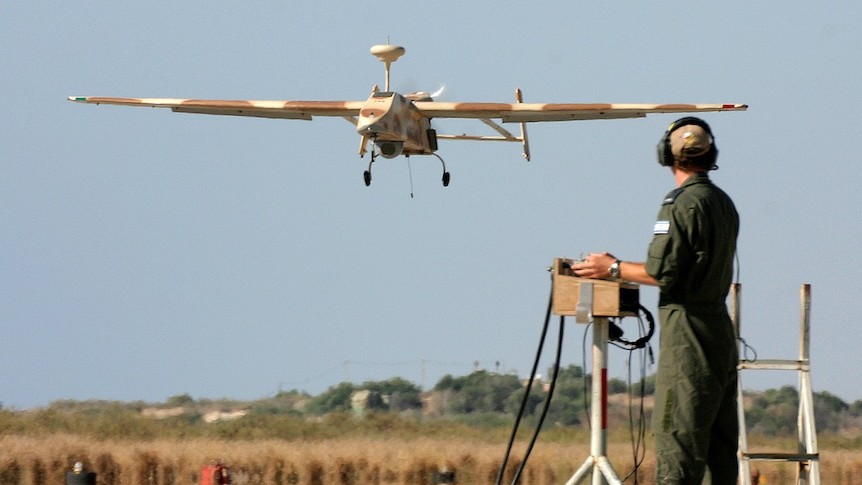
Meanwhile, for most Palestinians in Gaza the anxiety-inducing soundtrack to their lives is the constant buzz of the remotely piloted aircraft – better known as “drones” – that hover in the skies above.
Drones are increasingly being used for surveillance and extra-judicial execution in parts of the Middle East, especially by the US, but in nowhere more than Gaza has the drone become a permanent fixture of life. More than 1.7 million Palestinians, confined by Israel to a small territory in one of the most densely populated areas in the world, are subject to near continual surveillance and intermittent death raining down from the sky.
There is little hope of escaping the zenana – an Arabic word referring to a wife’s relentless nagging that Gazans have adopted to describe the drone’s oppressive noise and their feelings about it. According to statistics compiled by human rights groups in Gaza, civilians are the chief casualties of what Israel refers to as “surgical” strikes from drones.
“When you hear the drones, you feel naked and vulnerable,” said Hamdi Shaqura, deputy director of the Palestinian Centre for Human Rights, based in Gaza City. “The buzz is the sound of death. There is no escape, nowhere is private. It is a reminder that, whatever Israel and the international community assert, the occupation has not ended. We are still living completely under Israeli control. They control the borders and the sea and they decide our fates from their position in the sky,” said Shaqura.
The Israeli military did not respond to Al Jazeera’s requests for comment.
Suffer the children
The sense of permanent exposure, coupled with the fear of being mistakenly targeted, has inflicted deep psychological scars on civilians, especially children, according to experts.
“There is a great sense of insecurity. Nowhere feels safe for the children, and they feel no one can offer them protection, not even their parents,” said Ahmed Tawahina, a psychologist running clinics in Gaza as part of the Community Mental Health Programme. “That traumatises both the children and parents, who feel they are failing in their most basic responsibility.”
Shaqura observed: “From a political perspective, there is a deep paradox. Israel says it needs security, but it demands it at the cost of our constant insecurity.”
There are no statistics that detail the effect of the drones on Palestinians in Gaza. Doctors admit it is impossible to separate the psychological toll inflicted by drones from other sources of damage to mental health, such as air strikes by F-16s, severe restrictions on movement and the economic insecurity caused by Israel’s blockade.
But field researchers working for Palestinian rights groups point out that the use of drones is intimately tied to these other sources of fear and anxiety. Drones fire missiles themselves, they guide attacks by F-16s or helicopters, and they patrol and oversee the borders.
A survey in medical journal The Lancet following Operation Cast Lead, Israel’s month-long attack on Gaza in winter 2008-09, found large percentages of children suffered from symptoms of psychological trauma: Fifty-eight percent permanently feared the dark; 43 percent reported regular nightmares; 37 percent wet the bed and 42 percent had crying attacks.
Tawahina described the sense of being constantly observed as a “form of psychological torture, which exhausts people’s mental and emotional resources. Among children at school, this can be seen in poor concentration and unruly behaviour.” The trauma for children is compounded by the fact that the drones also disrupt what should be their safest activity – watching TV at home. When a drone is operating nearby, it invariably interferes with satellite reception.
”It doesn’t make headlines, but it is another example of how there is no escape from the drones. Parents want their children indoors, where it feels safer and where they’re less likely to hear the drones, but still the drone finds a way into their home. The children cannot even switch off from the traumas around them by watching TV because of the drones.”
Israel’s ‘major advantage’
Israel developed its first drones in the early 1980s, during its long occupation of south Lebanon, to gather aerial intelligence without exposing Israeli pilots to anti-aircraft missiles. Efraim Inbar, director of the Begin-Sadat Centre for Strategic Studies at Bar Ilan University, said drones help in situations where good, on-the-ground intelligence is lacking. “What the UAV gives you is eyes on the other side of the hill or over the border,” he said. “That provides Israel with a major advantage over its enemies.”
Other Israeli analysts have claimed that the use of drones, with their detailed intelligence-collecting abilities, is justified because they reduce the chances of errors and the likelihood of “collateral damage” – civilian deaths – during attacks.
But, according to Inbar, the drone is no better equipped than other aircraft for gathering intelligence or carrying out an execution.
“The advantage from Israel’s point of view is that using a drone for these tasks reduces the risk of endangering a pilot’s life or losing an expensive plane. That is why we are moving towards much greater use of these kinds of robots on the battlefield,” he said.
‘Mistakes can happen’
According to Gaza human rights group al-Mezan, Israel started using drones over the territory from the start of the second intifada in 2000, but only for surveillance.
Israel’s first extra-judicial executions using drones occurred in 2004, when two Palestinians were killed. But these operations greatly expanded after 2006, in the wake of Israel’s withdrawal of settlers and soldiers from Gaza and the rise to power of the Palestinian Islamic movement Hamas.
Drones, the front-line weapon in Israel’s surveillance operations and efforts to foil rocket attacks, killed more than 90 Palestinians in each of the years 2006 and 2007, according to al-Mezan. The figures soared during Operation Cast Lead and in its aftermath, with 461 Palestinians killed by drones in 2009. The number peaked again with 199 deaths in 2012, the year when Israel launched the eight-day Operation Pillar of Defence against Gaza.
Despite Israeli claims that the intelligence provided by drones makes it easier to target those Palestinians it has defined as “terrorists”, research shows civilians are the main victims. In the 2012 Pillar of Defence operation, 36 of the 162 Palestinians killed were a result of drone strikes, and a further 100 were injured by drones. Of those 36 killed, two-thirds were civilians.
Also revealing was a finding that, although drones were used in only five percent of air strikes, they accounted for 23 percent of the total deaths during Pillar of Defence. According to the Economist magazine, the assassination of Hamas leader Ahmed Jabari, which triggered that operation, was carried out using a Hermes 450 drone.
Palestinian fighters report that they have responded to the constant surveillance by living in hiding, rarely going outdoors and avoiding using phones or cars. It is a way of life not possible for most people in Gaza.
Gaza’s armed groups are reported to be trying to find a way to jam the drones’ navigation systems. In the meantime, Hamas has claimed it has shot down three drones, the latest this month, though Israel says all three crashed due to malfunctions.
Last week, on the anniversary of the launch of Pillar of Defence, an Israeli commander whose soldiers control the drones over Gaza from a base south of Tel Aviv told the Haaretz newspaper that “many” air strikes during the operation had involved drones. “Lt Col Shay” was quoted saying: “Ultimately, we are at war. As much as the IDF strives to carry out the most precise surgical strikes, mistakes can happen in the air or on the ground.”
Random death by drone
It is for this reason that drones have become increasingly associated with random death from the sky, said Samir Zaqout, a senior field researcher for Al-Mezan.
“We know from the footage taken by drones that Israel can see what is happening below in the finest detail. And yet women and children keep being killed in drone attacks. Why the continual mistakes? The answer, I think, is that these aren’t mistakes. The message Israel wants to send us is that there is no protection whether you are a civilian or fighter. They want us afraid and to make us turn on the resistance [Palestinian fighters].”
Zaqout also points to a more recent use of drones – what has come to be known as “roof-knocking”. This is when a drone fires small missiles at the roof of a building to warn the inhabitants to evacuate – a practice Israel developed during Operation Cast Lead three years earlier, to allay international concerns about its repeated levellings of buildings with civilians inside.
In Pillar of Defence in 2012, 33 buildings were targeted by roof-knocking.
Israel says it provides 10 minutes’ warning from a roof-knock to an air strike, but, in practice, families find they often have much less time. This, said Zaqout, puts large families in great danger as they usually send their members out in small groups to be sure they will not be attacked as they move onto the streets.
One notorious case occurred during Cast Lead, when six members of the Salha family, all women and children, were killed when their home was shelled moments after a roof-knocking. The father, Fayez Salha, who survived, lost a case for damages in Israel’s Supreme Court last February and was ordered to pay costs after the judges ruled that the attack was legitimate because it occurred as part of a military operation.
A US citizen who has lived long-term in Gaza, who wished not be named for fear of reprisals from Israel, said she often heard the drones at night when the street noise dies down, or as they hover above her while out walking. “The sound is like the buzz of a mosquito, although there is one type of drone that sometimes comes into view that is silent,” she said.
She added that she knew of families that, before moving into a new apartment building, checked to see whether it housed a fighter or a relative of a fighter, for fear that the building may be attacked by Israel.
Shaqura said the drones inevitably affect one’s day-to-day behaviour. He said he was jogging early one morning while a drone hovered overhead.
“I got 100 metres from my front door when I started to feel overwhelmed with fear. I realised that my tracksuit was black, the same colour as many of the fighters’ uniforms. I read in my work too many reports of civilians being killed by drones not to see the danger. So I hurried back home.”
Robert Stiver’s message:
“I seethe with helpless indignation and rage at the despicable members of the “human” race, including me, who (i) perpetrate and (ii) allow this unspeakable tragedy to continue, always worsening, most often vindictive, all too often indifferent to the hapless-victims aspects of it. And I must admit that I am as outraged at the God who, via the vaunted “free will” He is credited with giving us, has not yet found “His time” to intervene and put paid to this unending stain on humanity — a stain that, in my 20th-21st Century view, begins and ends with militant/political Zionism and its ever-present worldwide practitioners.
Sadly – how sadly – the Palestinian Authority and the quisling Fateh are in lockstep, fellow travelers with this miasma of shame and inhumanity. Hamas and Fateh must overcome the USraeli “divide and rule” tactics and link arms as a solid force of resistance to the illegal occupation of their homeland. Today, that must be the number one priority!
……..
And thanks to Turkey and Qatar for having the scruples to toss a few coins to the suffering masses, perhaps alleviating but by no means solving their torment…as I am mystified that they don’t join hands, trek to Geneva or NYCity and demand a white-hot emergency meeting of the UNSC in demand that international law and countless supportive UNSC resolutions be enforced. Failing any action there, a certainty because of the US’ enabling of pure evil, the Turkish-Qatari reps should trek to the UNGA and orchestrate a (I’ve forgotten the term…”Uniting for Peace”) proper response and accompanying action. The “response” would be overwhelming – on the order of 150 pro, 5 opposed. Why cannot this scenario take place?
Let us pity – we have nothing else to offer – the brave, beleaguered residents of Gaza. Our pity should be informed by mental images of the children there, slogging through a toxic mix of urine and feces, facing epidemics of pestilence ready to strike at any moment, lacking hope for any surcease of their everyday misery and for a future of human rights, normality and dignity — victims of a deliberately vicious, internationally illegal collective persecution (not “mere” punishment…persecution) of them and their families.
Today/29th is the International Day of Solidarity with the Palestinian People. Where is the solidarity?
What to do, in the name of common justice? I know not; it seems useless, all useless…”
Goliath, Life and Loathing in Greater Israel – Max Blumenthal on Reality Asserts Itself pt1
Halloween, at least in part, originally was a ceremony for the dead, and in the Christian context an interval to honour or pray for those who had died but were still parked, so to speak, in Purgatory, awaiting their eventual ascent to heaven. It was, and still is, underneath the costumery and fun, a time to think of the dead.
Death may be the only taboo left in the modern world. We cosmetize to delay its inevitable advent. Botox and surgery are our apotropaic — our effort to ward off carnal dissolution. But other eras were not so skittish about death.
Connoisseurs of death can do no better than to read and read again the great 17th-century rhapsody of Sir Thomas Browne, known as Urne-Burial or Discourse of the Sepulchral Urns lately found in Norfolk. It is a soaring meditation on how humans have sought to cheat oblivion, to secure themselves against time, by the manner and scale of their memorials. The Pyramids of Egypt are the most monumental. And every common headstone is but a poor man’s pyramid.
Browne scoffs at all attempts: “But all was vanity, feeding the wind and folly. The Egyptian mummies, which Cambyses or time hath spared, avarice now consumeth. Mummy is become merchandise, Mizraim cures wounds and Pharoh is sold for balsams.” (By Browne’s time, the use of “mummy” as a drug was common, and there was a traffic in Egyptian mummies to Europe’s apothecaries.)
He mocks the Emperors who sought to have their names live forever: “There is no antidote against the opium of time … our fathers find their graves in our short memories … Generations pass while some trees stand, and old families last not three oaks.”
John Donne, a Church of England cleric whose works appeared in the early 17th century, was fascinated by the carnal sharing between the dominions of Eros (love) and Thanatos (death). Love’s urgency is seen as a flight from Death.
Perhaps the greatest funeral oration ever given was Donne’s commentary on the text of Psalms 68:20, “Unto God, the Lord, belong the issues of death.” It is an obsessive, morbid-seeming, up-close mediation on the physical decay attendant on death. And what is even more remarkable was that Donne rose from his own sickbed to preach it at Whitehall on the first Friday of Lent in 1630 — in essence, Donne preaching his own funeral sermon: “For this whole World is but a Universall Churchyard, but our common grave and the life and motion of the greatest persons in it, is but the shaking of buried bodies in their graves by an Earthquake. That which we call life is but Hebdomada mortium, a week of death…”
As if in preparation for that sermon, he placed himself in his coffin, wrapped in a winding sheet. Donne was a genius of the erotic in his early life, and a genius of dissolution and decay in his later. The phrase that everyone knows of Donne, unearthed for a title by Hemmingway, is “for whom the bell tolls.” That was, of course, a funeral bell.
In the 17th century, the grave and sex were verbally akin, the most common pun being “to die” signifying both the end of life and sexual climax. In Andrew Marvell’s famous “To His Coy Mistress,” the poet eerily woos the lady to “enjoy” while she can, for after death “then worms shall try / That long preserv’d virginity / And your quaint honour turn to dust / And into ashes all my lust / The grave’s a fine and private place / But none I think do there embrace.”
Shakespeare, naturally, is another who never flinched. Romeo and Juliet is really a gothic love story, told in the shadow of death. Measure for Measure has the brutal soliloquy on the terror of death, from Portia’s imprisoned brother: “But to die, and goe we know not where / To lie in cold obstruction and to rot / This sensible warm motion to become / A kneaded clod.”
So much of what is memorable in language about death comes from this period in history, when brilliant, word-mad minds, in full intellectual fever, sought in language a means to state their fears in order, partially, to quell them.
But if you should want some lift from these dark and chilling ruminations, there is one 20th century poem by Wallace Stevens that has a, let us say, most pleasant tone, his “Sunday Morning.” For Stevens, “death is the mother of beauty; hence from her, alone / shall come fulfillment to our dreams / and our desires.”
As a young kid, I loved Halloween in my neighbourhood of Verdun, a poor English suburb of French Montreal. The last Time I went to a Halloween Costume Party was 40 years ago and I went as Father Time.
My Vision and Understanding of Death
There is a morbid fascination by this generation for Zombies, more than earlier generations. Toronto just had a Zombie parade with some real scary looking walking Dead.
Zombies symbolize The Walking Dead among us, and in the context of your writing, most people are the Walking Dead, and without exception, are headed to the same finality in this world.
The vanity of the fancy Tombstone or Mausoleum is irrelevant. The Destination of the Grave is the same for all that do not believe Death is only a Doorway to another Dimension of Being.
Jews and Gentiles, Princes, Paupers, Believers and Atheists, the Good, the Bad and the Ugly, in Death, end up as dust and ashes in the dirt of this earth by the Great Equalizer.
If only the people could find that Equality while we’re still alive in this world?
And Judgment is turned away backward, and Justice stands afar off: for Truth is fallen in the street, and EQUITY cannot enter. Isaiah 59
And the nations were angry, and your wrath is come, and the time of the dead, (zombies) that they should be judged, and that you should give reward to your servants the prophets, and to the saints, and them that fear your name, small and great; and should destroy them which destroy the earth Revelation 11:18
When you can see it happening in this world, is it Revelation being revealed? Everyone can see the Nations are angry and more people will be sent to the finality of the Grave.
The Christian Faith believes Death entered this world by the sin of one man, Adam, at the Beginning of the Sentient Human struggle thousands of years ago. Humans have gone to the Grave all that TIME.
By the same Faith, Death is swallowed up by the blood sacrifice of one man, Jesus, enduring the Cross in Jerusalem, fulfilling once and for all, the requirement of the ritual blood sacrifice of the ancient Jewish religion.
For as much then as the children are partakers of flesh and blood, he also himself likewise took part of the same; that through death he might destroy him that had the power of death, that is, the devil; And deliver them who through fear of death were all their lifetime subject to bondage. For verily he took not on him the nature of angels; but he took on him the seed of Abraham.
Wherefore in all things it behooved him to be made like his brethren, that he might be a merciful and faithful high priest in things pertaining to God, to make reconciliation for the sins of the people.
For in that he himself has suffered being tempted, he is able to help them that are tempted. Hebrews 2
What is the Object and Goal of that Faith in this world, before we get to the Grave? As an Individual, this is the single most important insight of the entire Bible of what is at stake to my Mind and Spirit.
Behold, I stand at the door, and knock: if any man hear my voice, and open the door, I will come in to him, and will sup with him, and he with me. To HIM THAT OVERCOMES will I grant to SIT WITH ME IN MY THRONE, even as I ALSO OVERCAME, and AM SET DOWN WITH MY FATHER IN MY THRONE. He that has an ear, let him hear what the Spirit says to the churches. Revelation 3
Any Individual, recognizing the Spirit of the letter, and willing to have the Patience and Trust to endure whatever Life brings, can Overcome all Life’s difficulties, doubts, reverses and challenges. Then you will have much Time Alone to reason with God since most other people just don’t care, comfortable with their cocoon in The Matrix.
By these words, God invites Humans TO BECOME God with God after Death, preparing for that while we are Alive, Resurrecting with the Risen Christ Day by Day in this world. The paid holiday of Easter is supposed to remind us of this.
Everyone can overcome if they Truly desire and believe with a sincere, humble heart, in finding The Way.
 That Day, I came alive to God and/or God came alive in me. Before that unexpected Day I was like most people, never thinking about God. There was no time or room for God in Life, my thoughts, my calculations and questioning of Life and the systems of THIS world. Why it is the way it is?
 no turning back. I describe what happened to me that Day here, without exaggeration or embellishment of the Truth.
 unequivocally to the world, “Christ is come in my Flesh.” This I do here!