LEO XIV


1st appearance of Pope Leo

I was very surprised Pope Leo was elected the 2nd Day of the Conclave. With so many unknown Cardinals, I thought it could take a week.

But the Lord does work in mysterious ways. Once the Cardinals are cut off from the World completely in the Conclave that started May 7, they depend on the Holy Spirit to guide them in making such an important decision. The Holy Spirit acted fast this Time.

Donald Trump posted this image of himself on his Truth Social Website 3 Days before the Conclave started:

He already had a Vatican like Curia
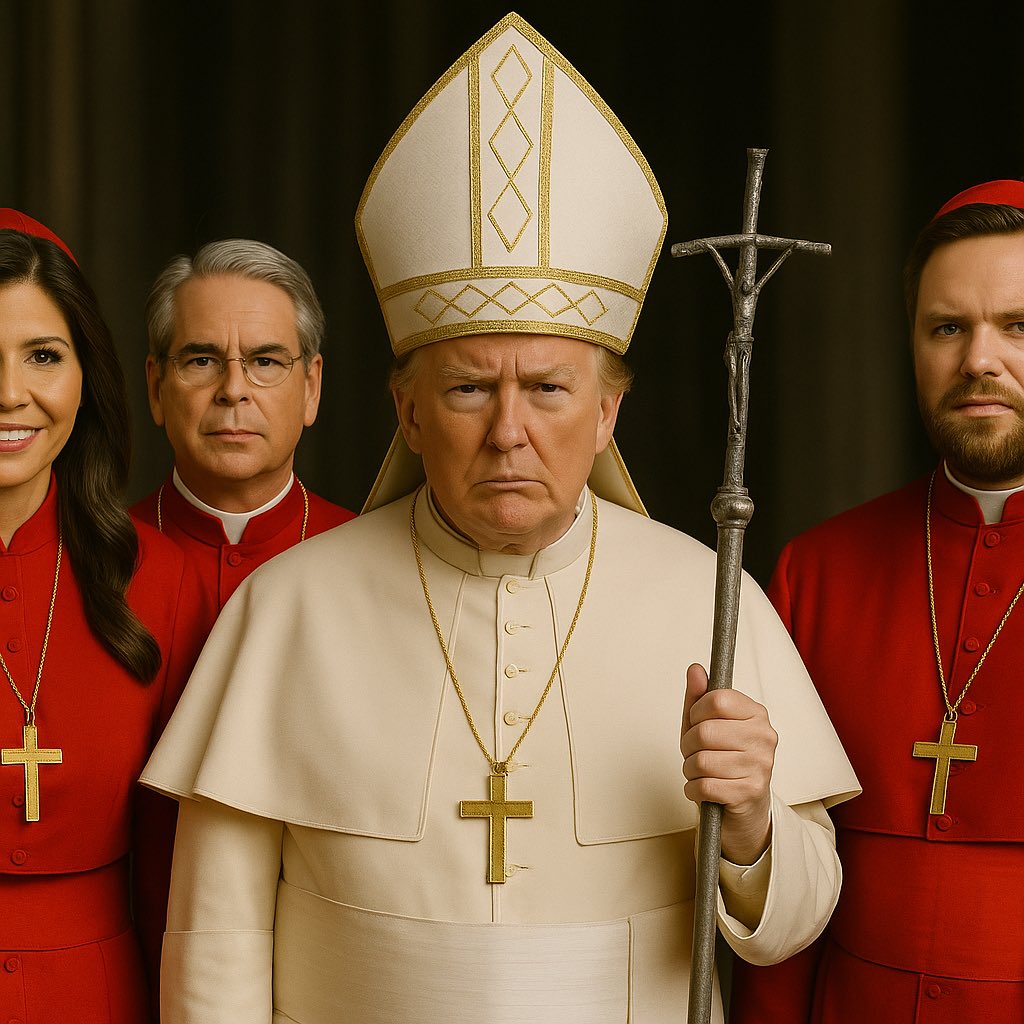
Most probably all the Cardinals were talking about Trump posing as Pope the 1st Day of the Conclave.

The Holy Spirit moved quickly having the Cardinals realize the Cardinal having Pastoral Experience ministering to the poor, Vatican experience as an insider, and an American, was the best possible choice to speak to Trump the anti-Pope and anti-Christ in English, so that nothing would be lost in translation. He was elected with the necessary 2/3 consensus in record Time, the 2nd Day of the Conclave.

This is the 1st homily Pope Leo gave at his 1st Mass as Pope for the Cardinals. Reading it, he is following in the footsteps of Pope Francis, and I expect Leo XIV to use the Bully Pulpit like no Pope before him in our Lifetimes.

Leo spoke briefly in English before his homily, saying:

“I want to repeat the words from the Responsorial Psalm: ‘I will sing a new song to the Lord, because He has done marvels,’ and indeed, not just with me but with all of us.

“My brother Cardinals, as we celebrate this morning, I invite you to reflect on the marvels the Lord has done, the blessings that the Lord continues to pour out on all of us through the Ministry of Peter.

“You have called me to carry that cross, and to carry out that mission, and I know I can rely on each and every one of you to walk with me, as we continue as a Church, as a community of friends of Jesus, as believers, to announce the Good News, to announce the Gospel.”

During his homily, delivered in Italian, Leo said that Christians must serve a world that is often hostile to their beliefs.

“Even today, there are many settings in which the Christian faith is considered absurd, meant for the weak and unintelligent. Settings where other securities are preferred, like technology, money, success, power, or pleasure.

“These are contexts where it is not easy to preach the Gospel and bear witness to its truth, where believers are mocked, opposed, despised or at best tolerated and pitied. Yet, precisely for this reason, they are the places where our missionary outreach is desperately needed. A lack of faith is often tragically accompanied by the loss of meaning in life, the neglect of mercy, appalling violations of human dignity, the crisis of the family and so many other wounds that afflict our society.”

Here is the full homily, as translated from the Italian by the Vatican:

“You are the Christ, the Son of the living God” (Mt 16:16). In these words, Peter, asked by the Master, together with the other disciples, about his faith in him, expressed the patrimony that the Church, through the apostolic succession, has preserved, deepened and handed on for two thousand years.

Jesus is the Christ, the Son of the living God: the one Saviour, who alone reveals the face of the Father.

In him, God, in order to make himself close and accessible to men and women, revealed himself to us in the trusting eyes of a child, in the lively mind of a young person and in the mature features of a man, finally appearing to his disciples after the resurrection with his glorious body. He thus showed us a model of human holiness that we can all imitate, together with the promise of an eternal destiny that transcends all our limits and abilities.

Peter, in his response, understands both of these things: the gift of God and the path to follow in order to allow himself to be changed by that gift. They are two inseparable aspects of salvation entrusted to the Church to be proclaimed for the good of the human race. Indeed, they are entrusted to us, who were chosen by him before we were formed in our mothers’ wombs, reborn in the waters of Baptism and, surpassing our limitations and with no merit of our own, brought here and sent forth from here, so that the Gospel might be proclaimed to every creature (cf. Mk 16:15).

In a particular way, God has called me by your election to succeed the Prince of the Apostles, and has entrusted this treasure to me so that, with his help, I may be its faithful administrator (1 Cor 4:2) for the sake of the entire mystical Body of the Church. He has done so in order that she may be ever more fully a city set on a hill (Rev 21:10), an ark of salvation sailing through the waters of history and a beacon that illumines the dark nights of this world. And this, not so much through the magnificence of her structures or the grandeur of her buildings – like the monuments among which we find ourselves – but rather through the holiness of her members. For we are the people whom God has chosen as his own, so that we may declare the wonderful deeds of him who called us out of darkness into his marvellous light (1 Pet 2:9).

Peter, however, makes his profession of faith in reply to a specific question: “Who do people say that the Son of Man is?” (Mt 16:13). The question is not insignificant. It concerns an essential aspect of our ministry, namely, the world in which we live, with its limitations and its potential, its questions and its convictions.

“Who do people say that the Son of Man is?” If we reflect on the scene we are considering, we might find two possible answers, which characterize two different attitudes.

Newly elected Pope Leo XIV, second from left, concelebrates Mass with the College of Cardinals inside the Sistine Chapel at the Vatican the day after his election as 267th pontiff of the Roman Catholic Church, Friday, May 9, 2025.

Newly elected Pope Leo XIV, second from left, con-celebrates Mass with the College of Cardinals inside the Sistine Chapel at the Vatican the day after his election as 267th pontiff of the Roman Catholic Church, Friday, May 9, 2025.

First, there is the world’s response. Matthew tells us that this conversation between Jesus and his disciples takes place in the beautiful town of Caesarea Philippi, filled with luxurious palaces, set in a magnificent natural landscape at the foot of Mount Hermon, but also a place of cruel power plays and the scene of betrayals and infidelity. This setting speaks to us of a world that considers Jesus a completely insignificant person, at best someone with an unusual and striking way of speaking and acting. And so, once his presence becomes irksome because of his demands for honesty and his stern moral requirements, this “world” will not hesitate to reject and eliminate him.

Then there is the other possible response to Jesus’ question: that of ordinary people. For them, the Nazarene is not a charlatan, but an upright man, one who has courage, who speaks well and says the right things, like other great prophets in the history of Israel. That is why they follow him, at least for as long as they can do so without too much risk or inconvenience. Yet to them he is only a man, and therefore, in times of danger, during his passion, they too abandon him and depart disappointed.

What is striking about these two attitudes is their relevance today. They embody notions that we could easily find on the lips of many men and women in our own time, even if, while essentially identical, they are expressed in different language.

Even today, there are many settings in which the Christian faith is considered absurd, meant for the weak and unintelligent. Settings where other securities are preferred, like technology, money, success, power, or pleasure.

These are contexts where it is not easy to preach the Gospel and bear witness to its truth, where believers are mocked, opposed, despised or at best tolerated and pitied. Yet, precisely for this reason, they are the places where our missionary outreach is desperately needed. A lack of faith is often tragically accompanied by the loss of meaning in life, the neglect of mercy, appalling violations of human dignity, the crisis of the family and so many other wounds that afflict our society.

Today, too, there are many settings in which Jesus, although appreciated as a man, is reduced to a kind of charismatic leader or superman. This is true not only among non-believers but also among many baptized Christians, who thus end up living, at this level, in a state of practical atheism.

This is the world that has been entrusted to us, a world in which, as Pope Francis taught us so many times, we are called to bear witness to our joyful faith in Jesus the Saviour. Therefore, it is essential that we too repeat, with Peter: “You are the Christ, the Son of the living God” (Mt 16:16).

It is essential to do this, first of all, in our personal relationship with the Lord, in our commitment to a daily journey of conversion. Then, to do so as a Church, experiencing together our fidelity to the Lord and bringing the Good News to all.

I say this first of all to myself, as the Successor of Peter, as I begin my mission as Bishop of Rome and, according to the well-known expression of Saint Ignatius of Antioch, am called to preside in charity over the universal Church (cf. Letter to the Romans, Prologue). Saint Ignatius, who was led in chains to this city, the place of his impending sacrifice, wrote to the Christians there: “Then I will truly be a disciple of Jesus Christ, when the world no longer sees my body” (Letter to the Romans, IV, 1). Ignatius was speaking about being devoured by wild beasts in the arena – and so it happened – but his words apply more generally to an indispensable commitment for all those in the Church who exercise a ministry of authority. It is to move aside so that Christ may remain, to make oneself small so that he may be known and glorified (cf. Jn 3:30), to spend oneself to the utmost so that all may have the opportunity to know and love him.

May God grant me this grace, today and always, through the loving intercession of Mary, Mother of the Church.

____________________________________________________________

This is an excerpt from the 1st address to the Diplomatic Corp Today, Friday 16, by Pope Leo. All too often, Diplomats work in the interests of Corporations. Pope Leo may change those MONEY driven priorities. I Believe like the Pope.

Three pillars: peace, justice, and truth

At the heart of the Pope’s address were three essential words, which he identified as the pillars of the Church’s missionary activity and the foundation of the Holy See’s diplomatic engagement: peace, justice and truth.

Peace

The first word, peace, he described not as the mere absence of war, but as a demanding and active gift, “the first gift of Christ”. True peace, he continued, must begin in the human heart, through humility, careful speech, and the rejection of both pride and vengeance. This, he continued, refers to words as well, since “not only weapons can wound and even kill”.

With this in mind, Pope Leo XIV emphasised the indispensable role of religious freedom and interreligious dialogue in cultivating peace. He called for a renewal of multilateral diplomacy and a decisive halt to the arms race, echoing Pope Francis’ final Urbi et Orbi message, in which he warned, as he often did, that “no peace is possible without true disarmament”.

Justice

Turning then to the second word, justice, Pope Leo reflected on the memory of Pope Leo XIII and the Church’s rich tradition of social teaching. With the world facing ever deepening global inequalities, Pope Leo urged leaders to invest in the family and to uphold the dignity of every human person.

He then shared a brief reflection on his own identity as the child of immigrants, and called for greater solidarity, rooted in the shared human dignity of all people, regardless of circumstance or nationality.

Truth

Speaking then of the third and final world, truth, Pope Leo XIV described the essential need for authentic communication and peaceful relations. In a world where reality is often distorted, especially online, the Pope insisted on the Church’s duty to speak truth with charity, even when difficult or misunderstood.

“Truth,” he said, “is not an abstract principle but an encounter with the person of Christ”. It is this truth, he continued, that allows humanity to face its most urgent challenges, such as migration, technology or the environment, with unity and shared purpose.

Hope for a new path

Bringing his address to a close, Pope Leo XIV placed his ministry within the context of the Jubilee Year of Hope, which he described as a time for conversion, renewal, and above all, for leaving conflict behind.

Finally, he renewed the Holy See’s commitment to walking alongside every nation in building a world where all may live with dignity and peace. “It is my hope,” he concluded, “that this will be the case everywhere, starting with those places that suffer most grievously, like Ukraine and the Holy Land.”

https://www.vaticannews.va/en/pope/news/2025-05/pope-to-diplomatic-corps-build-peace-with-justice-truth-hope.html

Starting my 82nd Year on the 21st counting up, not down, I’m sure Pope Leo contemplated and meditated on these thoughts and song of David to God, since he was called by God to serve, verses 33-48 out of the176 verses in Psalm 119.

Instruct me, O Lord, [in] the way of Your statutes, and I shall keep it at every step. Enable me to understand and I shall keep Your Law, and I shall keep it wholeheartedly.

Lead me in the path of Your commandments for I desired it. Extend my heart to Your testimonies and not to monetary gain. Turn away my eyes from seeing vanity; with Your ways sustain me. Fulfill for Your servant Your word that is for Your fear. Remove my disgrace, which I feared, for Your judgments are good.

Behold, I longed for Your precepts; with Your righteousness sustain me. And may Your acts of kindness befall me, O Lord, Your salvation according to Your word. And I shall answer a word to those who disgrace me, for I trusted in Your word. And do not take out utterly from my mouth a word of truth, because I hoped for Your words.

And I shall keep Your Law constantly, forever and ever. And I shall walk in widely accepted ways, for I sought Your precepts. And I shall speak of Your testimonies in the presence of kings, and I shall not be ashamed. And I shall engage in Your commandments, which I love.

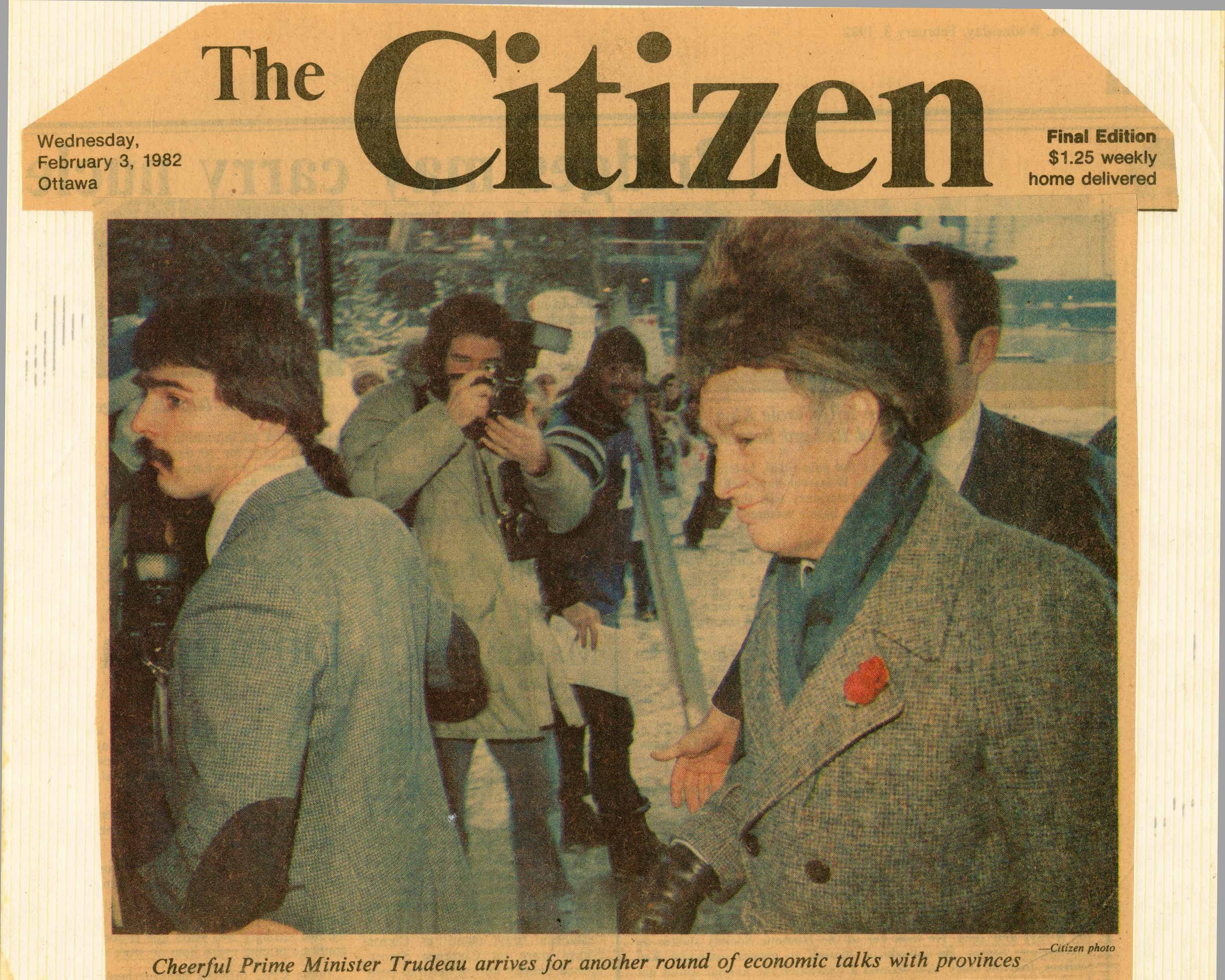
The RCMP have the records, but I was in the unusual position to be able to speak Face to Face with Prime Minister Pierre Trudeau as he entered or left the Members entrance to the House of Commons from 1977 until he quit in 1984.

Concerning Papal events in the larger World, in 1978 the Year of 3 Popes, my interactions with Trudeau were exceptional in the sense there was a Spiritual connection in the words spoken to him 3 times over a short period of Time and significant Papal events that garnered the World’s attention.

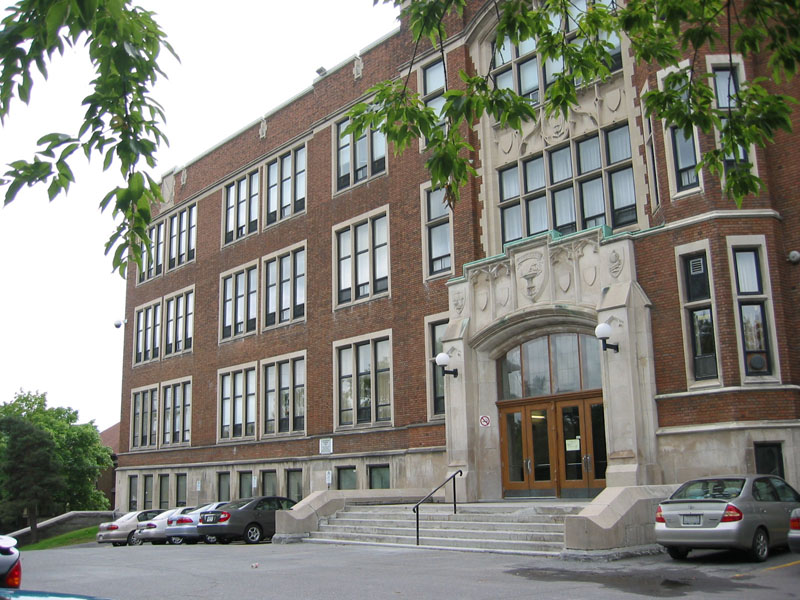
After the 1st encounter, Pope Paul VI died 3 days later. The 2nd Time, Pope John Paul I died. Trudeau had scheduled an election for 15 by-elections for 15 Parliamentary Seats and as he entered Glebe Collegiate in Ottawa to speak to the children, I was not 2 feet away from him as he passed by and said, “Prime Minister! Look at the Spirit of the 13. Feed the lambs.” I was speaking in the Spirit of the Letter in the Gospel of John 21:15-17, wearing my trademark jersey

I was in the Prime Minister’s Suite of a downtown Ottawa Hotel 3 Days later watching the election returns with an Independent Candidate when those returns were interrupted by the news of the unscheduled election of Pope John Paul II. Trudeau lost 13 of the 15 seats

In their Official reports, the Prime Minister’s RCMP Security Detail confirm the facts in my comment

More detail can be seen here: https://rayjc.com/2025/03/13/pierre-trudeau-the-year-of-three-popes-and-the-divine-shaking-of-earthly-powers/

Pierre Trudeau, the Year of Three Popes, and the Divine Shaking of Earthly Powers


In the fall of 1977, I found myself standing at the Member’s Entrance to the Canadian House of Commons, waiting for Prime Minister Pierre Trudeau. What followed was a series of encounters that would intertwine my life with his, the papacy, and the divine shaking of earthly powers—a story of faith, humility, and the enduring call to “feed the sheep.”

My journey with Trudeau began in 1977, when I wrote him a letter and attempted to deliver it to him as he returned from his daily lunch at 24 Sussex Drive. As his limousine pulled away, I shouted, “Prime Minister! I have some information for you, Sir. Will you accept it, please?” Trudeau froze in his footsteps, unable to move until his aides helped him. Days later, I returned to Parliament Hill, climbing the main stairway to the road in front of the Peace Tower. Just as Trudeau’s limo was passing by, it stopped unexpectedly. To my surprise and admiration, Trudeau got out and walked toward me.

“Why do you keep shouting at me?” he asked.
“To get your attention,” I replied.
“I’m a busy man. I’ve got my work to do,” he said.
“I’ve got my work to do too,” I answered, handing him the envelope.

A few days later, at an event on Parliament Hill, I asked Trudeau if he had read my note. The media often projected him as a devout Catholic, so I was surprised when he responded, “You only want to talk to me about God. Use your mind.” At that moment, I thought, The game is on. It was a challenge, but also an invitation to engage on a deeper level.

A year before my first encounter with Trudeau, in 1976, I was washing dishes at Suzanne’s Kitchen on the boardwalk of Venice, California, when I woke up remembering a vivid dream. In the dream, I was a small child, perhaps six or seven years old, dressed in an oversized General’s uniform. The cap covered my ears, the sleeves extended far beyond my hands, and the greatcoat and sword crumpled on the floor around me. I stood at the bottom of a grand stairway, looking up at the Pope, who was crowned and enthroned at the top, surrounded by all the pomp and ceremony of the Vatican.

As I watched, the Pope rose from his throne and descended the stairs. He approached me and said, “Here are the Keys.”
I asked, “You’re giving me the Keys?”
He answered, “Yes.”
“You’re giving me the Keys to the Kingdom?”
“Yes,” he replied.
“You’re giving me the Keys to the Vatican and the Treasury of the Vatican?”
In the dream, the Pope said, “It’s all yours, and you can do what you want with it.”
I answered, “If it’s all mine, let’s order champagne for the world and go uptown Saturday night.”
And then I woke up.

The dream stayed with me, its meaning unclear but its imagery unforgettable. It wasn’t until the Year of Three Popes in 1978 that I began to see its significance. Obviously the Pope didn’t deliver the keys to me physically, but in the real World 2 years later, the Pope in fact did come down from the throne, and Pope John Paul I who in fact came down from the throne came from Venice, Italy. You must decide if that was coincidence or design?

August 3, 1978, I had a chance encounter with Trudeau near the Langevin Block in Ottawa. As he stepped out of his limousine, I said, “Peter, feed the sheep.” The words were a variation of what Jesus said to Peter, the first Pope, in John 21:15-17. The official title of the Pope is “Successor to the Apostle Peter,” and Pierre is the French form of Peter. I couldn’t say “feed my sheep” because the sheep belong to God, not to me. Trudeau, perhaps puzzled but amused, shrugged his shoulders and replied, “Alright! Alright! I’ll feed the sheep,” before leaping up the stairs to his office.

The Official RCMP report confirms this encounter with Prime Minister Trudeau

Naturally the RCMP Agent would consider what I said to the Prime Minister as nonsensical not being aware of the spirit of the words Jesus said to the Apostle Peter the 1st Pope, recorded in John 21:15-17, Jesus said to him again the second time, Simon, son of Jonas, do you love me? Peter said to him, Yea, Lord; you know that I love you. Jesus said to him, Feed my sheep.

Three days later, Pope Paul VI, the successor to the Apostle Peter, passed away. The timing felt like more than a coincidence—it was as if the words I had spoken to Trudeau echoed across the globe, a reminder of the responsibility that comes with authority.

Paul VI was the last Pope to be Crowned and Enthroned in the 1000 years of Catholic Ritual and Tradition

The world was filled with hope and optimism in August 1978 when Cardinal Albino Luciani was elected Pope John Paul I. Known as the “smiling Pope,” he appeared relatively young, vibrant, and in good health. His warm demeanour and reputation for humility suggested that he would bring a fresh perspective to the Vatican, perhaps even cleaning house and ushering in a new era of transparency and reform. For many, his election felt like a breath of fresh air, a sign of renewal for the Catholic Church.

Most probably I was the only person on Earth to know the connection with the dream I had in Venice, California in 1976. This new Pope John Paul I who came down from the Throne 2 years later came from Venice, Italy.

Yet, just over a month into his papacy, on September 25, 1978, I experienced a profound spiritual impulse. A strong sense of conviction moved me to reach out to Pierre Trudeau once more, this time to reiterate the message I had delivered earlier: “Feed the sheep.” It was a call rooted in faith, a reminder of the divine responsibility that comes with leadership. However, Trudeau was out of town, so I phoned his personal secretary, Cecile Viau. I reminded her of my earlier encounter with the Prime Minister at the Langevin Block and asked her to convey the message to him: “Tell him to feed the sheep.”

Three days later, on September 28, 1978, the world was stunned by the sudden and unexpected death of Pope John Paul I. His passing after just 33 days as Pope sent shock waves through the Catholic Church and beyond. I was dumbfounded by the news. I had no foreknowledge of his death when I acted on that spiritual impulse September 25. It felt as though the timing of my message and his passing were intertwined in a way that defied coincidence, as if the call to “feed the sheep” echoed beyond Trudeau and into the very heart of the Church.

On October 13, 1978, Prime Minister Trudeau made an appearance at Glebe Collegiate Institute in Ottawa to speak to the children prior to what the media called a ¨mini-election¨ of 15 federal riding’s having a by-election. Standing at the main entrance to the school as he arrived, I said to the Prime Minister not 2 feet away from me, “Peter, look at the Spirit of the 13. Feed the lambs.” I was wearing my trademark No. 13 jersey.

Note: the RCMP agent in his Official report of that day with the noise of the melee of mass media at the entrance to the school singled out “13”

The only difference from John’s account in the Bible is Jesus said to Peter, to whom the Pope is Successor, “Feed my Lambs” 1st in the sequence. This is said last in the Spirit of the Day as it is written, But many that are first shall be last; and the last shall be first. Matthew 19:30

I always wore that jersey going to meet Trudeau. Standing at the curb between him and the photographer as he got out of his limousine I said, “Prime Minister! Look at my sign. I had it made for you and the Premiers!” An artist friend drew it in beautiful calligraphy.

It read: “Woe to those who judge for hire and profit, but not for Justice and Truth!” Obviously, the Prime Minister liked it. Maybe it reminded him of when he started his Political career on the theme of a Just Society?

Three days later I was in the Prime Minister’s Suite of a downtown Ottawa hotel watching election returns with Michael John Houlton the Independent Candidate for Ottawa Centre and other friends. Those returns were interrupted with news of the election of Pope John Paul II. Trudeau lost 13 of the 15 by-election seats up for grabs. Trudeau’s election was scheduled. The election of the Pope was not.

The 1st time I reasoned it could just be a co-incidence. What you have just read is exactly the way it happened. What would you think if that was your True Life experience?

This moment deepened my sense of awe at the mysterious ways in which faith and divine timing operate. The death of Pope John Paul I marked the beginning of another chapter in the Year of Three Popes, leading to the election of Cardinal Karol Wojtyła as Pope John Paul II. His papacy would go on to shape the Church and the world in profound ways, but the brief reign of John Paul I remained a poignant reminder of the fragility of life and the urgency of spiritual responsibility.

The dream of the keys, with its imagery of a child receiving the keys to the Vatican, took on even deeper meaning as I reflected on the seismic shifts in global power structures that unfolded in the late 20th century. One of the most significant of these was the Iranian Revolution of 1979, an event that not only ended the Persian monarchy—one of the oldest thrones in history—but also set in motion a chain of events that continues to shake the foundations of earthly powers to this day if you believe the MSM projecting a possible US-Israeli WAR with Iran.

The fall of the Shah in 1979 marked the end of a monarchy that had endured for over 2,500 years, predating even the Papacy. It was a moment of profound transformation, not just for Iran but for the world. The revolution replaced a secular, Western-aligned regime with an Islamic Republic, fundamentally altering the balance of power in the Middle East and beyond. The reverberations of this event are still felt today, as Iran remains a central player in global politics, religion, and culture.

The revolution was not merely a political upheaval; it was a spiritual and ideological awakening. It challenged the dominance of Western secularism and materialism, asserting the power of faith and tradition in shaping societies. In many ways, it echoed the themes of my dream—the handing over of the keys, the shaking of old systems, and the emergence of new ways of understanding power and authority.

The Iranian Revolution also highlighted the tension between earthly and spiritual authority. Just as the dream depicted the Pope descending from his throne to entrust the keys to a child, the revolution represented a shift from the opulence and excess of the Shah’s regime to the austere, faith-driven leadership of Ayatollah Khomeini. It was a reminder that true power often emerges from the margins, from those who are willing to challenge the status quo and embrace a higher calling.

This theme of transformation resonates with the broader narrative of my journey—from my encounters with Pierre Trudeau to the Year of Three Popes and the legacy of St. Francis of Assisi. Each of these moments reflects a divine shaking of earthly powers, a call to humility, service, and spiritual accountability. The Iranian Revolution, with its far-reaching consequences, is a stark reminder that no throne, no matter how ancient or powerful, is immune to the forces of change.

Centuries before my encounters with Trudeau and the papal nuncio, St. Francis of Assisi stood before Pope Innocent III in 1210, seeking approval for his radical vision of humility and simplicity. St. Francis’s commitment to serving the poor and living in harmony with creation challenged the opulence of the medieval Church. It took 800 years for a pope to take the name Francis, signalling a return to these values.

These videos of Francis of Assisi were posted to this Blog 2 years before Pope Francis I was elected

Pope Francis I, elected on this Day in 2013, has embodied this legacy, emphasizing humility, care for the poor, and environmental stewardship. His papacy is a reminder that the Church’s true strength lies not in its wealth or power but in its ability to reflect the love and compassion of Christ.

From my encounters with Trudeau to the lunch with the papal nuncio, and from the legacy of St. Francis to the papacy of Pope Francis I, my journey has been one of faith, humility, and divine timing. These moments—seemingly ordinary yet profoundly significant—remind us that true power lies not in titles or thrones but in the willingness to serve and uplift other

The dream of the keys, the shaking of earthly powers, and the ongoing transformation of global structures all point to a deeper truth: that divine timing and purpose are at work in the world, often in ways we cannot fully understand. Whether through the fall of ancient thrones, the rise of new leaders, or the quiet acts of faith and service, we are all part of a larger story—one that calls us to embrace humility, compassion, and the courage to feed the sheep.

As we navigate the challenges of our time, may we remember that the keys to the Kingdom are not meant to lock doors but to open them—to invite humanity into a space of love, compassion, and divine purpose.

To sum up, I had a hard time sleeping in anticipation of posting this article today, and I had this unusual dream:

I was in an elevator with an unknown, unrecognizable pope, and I was telling him he was wrong. Then, I was sitting in a pew of a packed church when Pope John Paul II, who passed away in 2005, came to me. He hugged me firmly, whispered in my ear, and the whole church saw it. Someone in the pew in front of me asked what had happened, and I answered, “It was proof of the resurrection of the dead.” After that, someone handed me a drink, saying, “You’re in charge,” and then I woke up.

The dream felt like a continuation of the spiritual journey I’ve been sharing with you. In the elevator with the unknown pope, I told him he was wrong—a moment that felt like a call to accountability, even within the highest levels of spiritual authority. Later, in the packed church, Pope John Paul II’s embrace and whispered message felt like a divine seal of approval, a reminder that those who have gone before us still guide and affirm our work. The resurrection of the dead, a cornerstone of Christian faith, became a living reality in that moment—a testament to the enduring power of truth and the interconnectedness of all who seek justice and humility.

God only knows what the tomorrows will bring? But as we navigate the challenges of our time, may we remember that the keys to the Kingdom are not meant to lock doors but to open them—to invite humanity into a space of love, compassion, and divine purpose.

Moving from Montreal to Ottawa in August 1977, for the last 7 years of his Administration until he quit in 1984, I was in the unique position to stand Face to Face with Prime Minister Pierre Trudeau as he entered or left The Members Entrance to the House of Commons as the Spirit moved me from Time to Time, to speak or pass him a letter in an envelope. In all those years there were only 4 exceptions, the 2 Times mentioned in this article, and the last 2 Times on 2 consecutive nights at the main entrance to The House under the Peace Tower.

How I got into that position is explained in ‘About Ray Joseph Cormier’ at the top of this page.

In February 1984, I was questioned at length by the RCMP on my attitude toward him. I was as surprised as every other CanaDian when he announced he was quitting 2 weeks later on February 29 of the Leap Year.

While the RCMP have all the records, Canadians were not aware of those historical facts, and I was surprised to learn the Prime Minister moved from the House of Commons to the Cormier House in Montreal designed by Ernest Cormier who also designed and built The Supreme Court of CanaDa.

The Spirit never moved me to go up to the Hill again to speak to any other Prime Minister after him, including his son Justin Trudeau, recently compelled to step down as PM. The Internet didn’t exist at that Time.