I walk across the beach, follow the ever-shifting outline of the water. The sun has begun to set; the sky is blossoming with fire. I watch the surf churn and froth as it rolls in and out. I find the waves to be contemplative. They comfort me, draw me into myself as the water is always inevitably drawn back to the sea. I step into the tide on a whim, and cool briny water surrounds my legs, sometimes splashing as high as my knees.
I stub my toe on a rock and a sharp staccato curse escapes my lips. It tears me away from my center, and for a moment I wonder at the fragile nature of my body. I look down, spot a chunk of granite half buried in the sand and pick it up. I hold it toward the light, examine the structure closely. I was there, I think, when it was formed, when the Earth itself was just a rock hurtling through the cosmos. I toss it back into the ocean and watch it land with a plop.
I try to remember the distant past, and sometimes I can almost glimpse the life beyond. But so much of who and what I am is inaccessible to me. I am an ocean, of which my humanity is only a remnant small enough to be caught in a glass jar. Like Jesus in the New Testament, I have a dual nature. I am both human and divine.
I have assumed many forms, have lived many lives spanning the gamut of time and space. Like light through a prism, I have been split apart, reduced to a broken spectrum of partial selves. I have inhabited countless worlds, existed as many species, loved and lost a thousand times for every star that’s ever burned in the sky.
I drift from one life to the next, a cosmic vagrant, the fullness of my being always just out of reach. I only ever know what I need to fulfill my current life’s purpose; I must regard everything else as a mystery.
I am an Immortal, but before the gas clouds of this universe had even condensed into stars I was exiled. The scope and nature of my crimes are lost to me, incomprehensible to my present form. I only know that I must atone. I strive in each life to make my brethren proud, because I know they’re watching and await my return. I know that someday I will redeem myself, that there will come a time when I will finally die my last death.
A wave rolls in, this one particularly strong, and I panic as I picture the sea preparing to swallow me whole.
I often imagine ways that I could die. It amazes me that after so many lives on so many different worlds, I could still fear something so banal. But my frail human psyche has bound me hand and foot to the dictatorship of instinct, and I must endure the biological imperative to survive like everyone else.
During the night I write. It’s the only way I can confront the shadows that haunt me in the small hours, the only way for me to give them form and expression. It’s my way of capturing small remnants of who I was. Yet words are imprecise, and there are so many thoughts that are inexpressible, transcendent, atoms of being that predate my humanity.
I gaze up. The sun is gone now, the sky transparent to the cosmos. I drink it in, eternal mysteries that are no longer mine to understand. I utter a silent prayer, a plea for mercy that I hope my kind will hear, and I accept by faith that they do.
If you were of the world, the world would love his own: but because you are not of the world, but I have chosen you out of the world, therefore the world hates you.
I have given them your word; and the world has hated them, because they are not of the world, even as I am not of the world. I pray not that you should take them out of the world, but that you should keep them from the evil. They are not of the world, even as I am not of the world.
For those with eyes wide open, it’s becoming apparent reading the comments and opinions in high places and low, that Day is being hastened since that Friday the 13th!
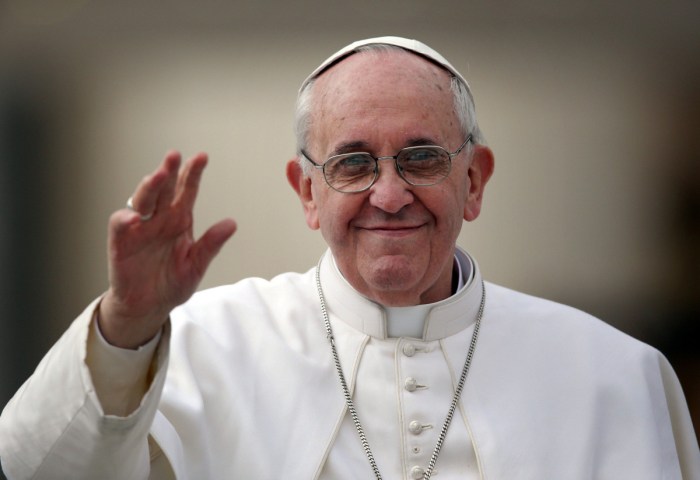
Pope Francis is going to visit 3 Countries in Africa this week, mostly Muslim, including to the Central African Republic, a current War Zone.
God Bless and Strengthen Pope Francis for this arduous Mission!
The Peace Prayer of St. Francis of Assisi
“Make me a channel of your peace,
Where there is hatred let me bring your love,
Where there is injury your pardon Lord,
And where there’s doubt true faith in you.
Make me a channel of your peace,
Where there’s despair in life, let me bring hope,
Where there is darkness, only light,
And where there’s sadness, ever joy.
O Master grant that I may never seek,
So much to be consoled as to console,
To be understood as to understand,
To be loved as to love with all my soul.
Make me a channel of your peace,
It is in pardoning that we are pardoned,
In giving of ourselves that we receive.
And in dying that we’re born to eternal life.
O Master grant that I may never seek,
So much to be consoled as to console,
To be understood as to understand,
And to love as to love with all my soul.
Make me a channel of your peace,
It is in pardoning that we are pardoned,
In giving of ourselves that we receive.
And in dying that we’re born to eternal life.
Make me a channel of your peace.”
It took 811 years after Francis of Assisi appeared before the Pope in 1202 for Francis to become Pope in 2013
The Pope. as a Leader of the people, can only point out what has to be done by the people themselves, 1st Individually, and then Communally.
If the ordinary, average, every Day people don’t do it, nothing in this world will change for the better, but for the worse, until as the human species, we set the irrevocable in motion, our own self-destruction in a Masada II/Holocaust II.
MESSAGE OF HIS HOLINESS
POPE FRANCIS FOR THE CELEBRATION OF THE
XLIX WORLD DAY OF PEACE
1 JANUARY 2016
Overcome Indifference and Win Peace
God is not indifferent! God cares about mankind! God does not abandon us! At the beginning of the New Year, I would like to share not only this profound conviction but also my cordial good wishes for prosperity, peace and the fulfilment of the hopes of every man and every woman, every family, people and nation throughout the world, including all Heads of State and Government and all religious leaders. We continue to trust that 2016 will see us all firmly and confidently engaged, on different levels, in the pursuit of justice and peace. Peace is both God’s gift and a human achievement. As a gift of God, it is entrusted to all men and women, who are called to attain it.
Maintaining our reasons for hope
Sadly, war and terrorism, accompanied by kidnapping, ethnic or religious persecution and the misuse of power, marked the past year from start to finish. In many parts of the world, these have became so common as to constitute a real “third world war fought piecemeal”. Yet some events of the year now ending inspire me, in looking ahead to the new year, to encourage everyone not to lose hope in our human ability to conquer evil and to combat resignation and indifference. They demonstrate our capacity to show solidarity and to rise above self-interest, apathy and indifference in the face of critical situations.
Here I would mention the efforts to bring world leaders together at COP21 in the search for new ways to confront climate change and to protect the earth, our common home. We can also think of two earlier global events: the Addis Ababa Summit for funding sustainable development worldwide and the adoption of the United Nations 2030 Agenda for Sustainable Development, aimed at ensuring a more dignified standard of living for all the world’s peoples, especially the poor, by that year.
For the Church, 2015 was a special year, since it marked the fiftieth anniversary of two documents of the Second Vatican Council which eloquently expressed her sense of solidarity with the world. Pope John XXIII, at the beginning of the Council, wanted to open wide the windows of the Church and to improve her communication with the world. The two documents, Nostra Aetateand Gaudium et Spes, are emblematic of the new relationship of dialogue, solidarity and accompaniment which the Church sought to awaken within the human family. In the Declaration Nostra Aetate, the Church expressed her openness to dialogue with non-Christian religions. In the Pastoral Constitution Gaudium et Spes, based on a recognition that “the joys and hopes, the grief and anguish of the people of our time, especially of those who are poor or afflicted, are the joys and hopes, the grief and anguish of the followers of Christ as well”,[1] the Church proposed to enter into dialogue with the entire human family about the problems of our world, as a sign of solidarity, respect and affection.[2]
Along these same lines, with the present Jubilee of Mercy I want to invite the Church to pray and work so that every Christian will have a humble and compassionate heart, one capable of proclaiming and witnessing to mercy. It is my hope that all of us will learn to “forgive and give”, to become more open “to those living on the outermost fringes of society – fringes which modern society itself creates”, and to refuse to fall into “a humiliating indifference or a monotonous routine which prevents us from discovering what is new! Let us ward off destructive cynicism!”[3]
There are many good reasons to believe in mankind’s capacity to act together in solidarity and, on the basis of our interconnection and interdependence, to demonstrate concern for the more vulnerable of our brothers and sisters and for the protection of the common good. This attitude of mutual responsibility is rooted in our fundamental vocation to fraternity and a life in common. Personal dignity and interpersonal relationships are what constitute us as human beings whom God willed to create in his own image and likeness. As creatures endowed with inalienable dignity, we are related to all our brothers and sisters, for whom we are responsible and with whom we act in solidarity. Lacking this relationship, we would be less human. We see, then, how indifference represents a menace to the human family. As we approach a new year, I would ask everyone to take stock of this reality, in order to overcome indifference and to win peace.
Kinds of indifference
Clearly, indifference is not something new; every period of history has known people who close their hearts to the needs of others, who close their eyes to what is happening around them, who turn aside to avoid encountering other people’s problems. But in our day, indifference has ceased to be a purely personal matter and has taken on broader dimensions, producing a certain “globalization of indifference”.
The first kind of indifference in human society is indifference to God, which then leads to indifference to one’s neighbour and to the environment. This is one of the grave consequences of a false humanism and practical materialism allied to relativism and nihilism. We have come to to think that we are the source and creator of ourselves, our lives and society. We feel self-sufficient, prepared not only to find a substitute for God but to do completely without him. As a consequence, we feel that we owe nothing to anyone but ourselves, and we claim only rights.[4] Against this erroneous understanding of the person, Pope Benedict XVI observed that neither man himself nor human development can, on their own, answer the question of our ultimate meaning.[5] Paul VI likewise stated that “there is no true humanism but that which is open to the Absolute, and is conscious of a vocation which gives human life its authentic significance”.[6]
Indifference to our neighbour shows itself in different ways. Some people are well-informed; they listen to the radio, read the newspapers or watch television, but they do so mechanically and without engagement. They are vaguely aware of the tragedies afflicting humanity, but they have no sense of involvement or compassion. Theirs is the attitude of those who know, but keep their gaze, their thoughts and their actions focused on themselves. Sadly, it must be said that today’s information explosion does not of itself lead to an increased concern for other people’s problems, which demands openness and a sense of solidarity.[7] Indeed, the information glut can numb people’s sensibilities and to some degree downplay the gravity of the problems. There are those who “simply content themselves with blaming the poor and the poor countries themselves for their troubles; indulging in unwarranted generalizations, they claim that the solution is an ‘education’ that would tranquilize them, making them tame and harmless. All this becomes even more exasperating for the marginalized in the light of the widespread and deeply rooted corruption found in many countries – in their governments, businesses and institutions – whatever the political ideology of their leaders.”[8]
In other cases, indifference shows itself in lack of concern for what is happening around us, especially if it does not touch us directly. Some people prefer not to ask questions or seek answers; they lead lives of comfort, deaf to the cry of those who suffer. Almost imperceptibly, we grow incapable of feeling compassion for others and for their problems; we have no interest in caring for them, as if their troubles were their own responsibility, and none of our business.[9] “When we are healthy and comfortable, we forget about others (something God the Father never does): we are unconcerned with their problems, their sufferings and the injustices they endure… Our heart grows cold. As long as I am relatively healthy and comfortable, I don’t think about those less well off.”[10]
Because we dwell in a common home, we cannot help but ask ourselves about the state of its health, as I sought to do in Laudato Si’. Water and air pollution, the indiscriminate exploitation of forests and the destruction of the natural environment are often the result of man’s indifference to man, since everything is interrelated. Then too, there is the way we treat animals, which has an effect on the way we treat other people[11], and the cases where people freely do elsewhere what they would never dare do at home.[12]
In these and in other situations, indifference leads to self-absorption and a lack of commitment. It thus contributes to the absence of peace with God, with our neighbour and with the environment.
Peace threatened by globalized indifference
Indifference towards God transcends the purely private sphere of the individual and affects the public and social sphere. As Benedict XVI pointed out, “the glorification of God and human peace on earth are closely linked”.[13] Indeed, “without openness to the transcendent, human beings easily become prey to relativism and find it difficult to act justly and to work for peace.[14] Disregard and the denial of God, which lead man to acknowledge no norm above himself and himself alone, have produced untold cruelty and violence.[15]
On both the individual and communitarian levels, indifference to one’s neighbour, born of indifference to God, finds expression in disinterest and a lack of engagement, which only help to prolong situations of injustice and grave social imbalance. These in turn can lead to conflicts or, in any event, generate a climate of dissatisfaction which risks exploding sooner or later into acts of violence and insecurity.
Indifference and lack of commitment constitute a grave dereliction of the duty whereby each of us must work in accordance with our abilities and our role in society for the promotion of the common good, and in particular for peace, which is one of mankind’s most precious goods.[16]
On the institutional level, indifference to others and to their dignity, their fundamental rights and their freedom, when it is part of a culture shaped by the pursuit of profit and hedonism, can foster and even justify actions and policies which ultimately represent threats to peace. Indifference can even lead to justifying deplorable economic policies which breed injustice, division and violence for the sake of ensuring the wellbeing of individuals or nations. Not infrequently, economic and political projects aim at securing or maintaining power and wealth, even at the cost of trampling on the basic rights and needs of others. When people witness the denial of their elementary rights, such as the right to food, water, health care or employment, they are tempted to obtain them by force.[17]
Moreover, indifference to the natural environment, by countenancing deforestation, pollution and natural catastrophes which uproot entire communities from their ecosystem and create profound insecurity, ends up creating new forms of poverty and new situations of injustice, often with dire consequences for security and peace. How many wars have been fought, and how many will continue to be fought, over a shortage of goods or out of an insatiable thirst for natural resources?[18]
From indifference to mercy: the conversion of hearts
One year ago, in my Message for the 2015 World Day of Peace, with the motto “No Longer Slaves, but Brothers and Sisters”, I evoked the first biblical icon of human brotherhood, that of Cain and Abel (cf. Gen 4:1-16). I meant to draw attract attention to how from the very beginning this original brotherhood was betrayed. Cain and Abel were brothers. Both came forth from the same womb, they were equal in dignity and created in the image and likeness of God; but their relationship as brothers was destroyed. “It was not only that Cain could not stand Abel; he killed him out of envy.”[19] Fratricide was the form of betrayal, and Cain’s refusal to acknowledge Abel as his brother became the first rupture in the family relations of fraternity, solidarity and mutual respect.
God then intervened to remind man of his responsibility towards his fellows, as he had also done when Adam and Eve, our first parents, ruptured their relationship with him, their Creator. “Then the Lord said to Cain: “Where is Abel your brother?” He said, “I do not know; am I my brother’s keeper?” But the Lord replied: “What you have you done? The voice of your brother’s blood is crying to me from the ground” (Gen 4:9-10).
Cain said he did not know what had happened to his brother, that he was not his brother’s keeper. He did not feel responsible for his life, for his fate. He did not feel involved. He was indifferent to his brother, despite their common origin. How sad! What a sorry tale of brothers, of families, of human beings! This was the first display of indifference between brothers. God, however, is not indifferent. Abel’s blood had immense value in his eyes, and he asked Cain to give an account of it. At the origin of the human race, God shows himself to be involved in man’s destiny. Later, when the children of Israel were slaves in Egypt, God once more intervened to tell Moses: “I have seen the affliction of my people who are in Egypt, and have heard their cry because of their taskmasters; I know their sufferings, and I have come down to deliver them out of the hand of the Egyptians, and to bring them up out of that land to a good and broad land, a land flowing with milk and honey” (Ex 3:7-8). We should note the verbs which describe God’s intervention: he sees, hears, knows, comes down and delivers. God does not remain indifferent. He is attentive and he acts.
In the same way, in Jesus his Son, God has come down among us. He took flesh and showed his solidarity with humanity in all things but sin. Jesus identified with us: he became “the first-born among many brethren” (Rom 8:29). He was not content merely to teach the crowds, but he was concerned for their welfare, especially when he saw them hungry (cf. Mk 6:34-44) or without work (cf. Mt 20:3). He was concerned not only for men and women, but also for the fish of the sea, the birds of the air, plants and trees, all things great and small. He saw and embraced all of creation. But he did more than just see; he touched people’s lives, he spoke to them, helped them and showed kindness to those in need. Not only this, but he felt strong emotions and he wept (cf. Jn 11:33-44). And he worked to put an end to suffering, sorrow, misery and death.
Jesus taught us to be merciful like our heavenly Father (cf. Lk 6:36). In the parable of the Good Samaritan (cf. Lk 10:29-37), he condemned those who fail to help others in need, those who “pass by on the other side” (cf. Lk 10:31-32). By this example, he taught his listeners, and his disciples in particular, to stop and to help alleviate the sufferings of this world and the pain of our brothers and sisters, using whatever means are at hand, beginning with our own time, however busy we may be. Indifference often seeks excuses: observing ritual prescriptions, looking to all the things needing to be done, hiding behind hostilities and prejudices which keep us apart.
Mercy is the heart of God. It must also be the heart of the members of the one great family of his children: a heart which beats all the more strongly wherever human dignity – as a reflection of the face of God in his creatures – is in play. Jesus tells us that love for others – foreigners, the sick, prisoners, the homeless, even our enemies – is the yardstick by which God will judge our actions. Our eternal destiny depends on this. It is not surprising that the Apostle Paul tells the Christians of Rome to rejoice with those who rejoice and to weep with those who weep (cf. Rom 12:15), or that he encourages the Corinthians to take up collections as a sign of solidarity with the suffering members of the Church (cf. 1 Cor 16:2-3). And Saint John writes: “If any one has the world’s goods and sees his brother or sister in need, yet refuses help, how does God’s love abide in him? (1 Jn 3:17; cf. Jas 2:15-16).
This then is why “it is absolutely essential for the Church and for the credibility of her message that she herself live and testify to mercy. Her language and her gestures must transmit mercy, so as to touch the hearts of all people and inspire them once more to find the road that leads to the Father. The Church’s first truth is the love of Christ. The Church makes herself a servant of this love and mediates it to all people: a love that forgives and expresses itself in the gift of oneself. Consequently, wherever the Church is present, the mercy of the Father must be evident. In our parishes, communities, associations and movements, in a word, wherever there are Christians, everyone should find an oasis of mercy.”[20]
We too, then, are called to make compassion, love, mercy and solidarity a true way of life, a rule of conduct in our relationships with one another.[21] This requires the conversion of our hearts: the grace of God has to turn our hearts of stone into hearts of flesh (cf. Ezek 36:26), open to others in authentic solidarity. For solidarity is much more than a “feeling of vague compassion or shallow distress at the misfortunes of so many people, both near and far”.[22] Solidarity is “a firm and persevering determination to commit oneself to the common good; that is to say to the good of all and of each individual, because we are all really responsible for all”,[23] because compassion flows from fraternity.
Understood in this way, solidarity represents the moral and social attitude which best corresponds to an awareness of the scourges of our own day, and to the growing interdependence, especially in a globalized world, between the lives of given individuals and communities and those of other men and women in the rest of the world.[24]
Building a culture of solidarity and mercy to overcome indifference
Solidarity, as a moral virtue and social attitude born of personal conversion, calls for commitment on the part of those responsible for education and formation.
I think first of families, which are called to a primary and vital mission of education. Families are the first place where the values of love and fraternity, togetherness and sharing, concern and care for others are lived out and handed on. They are also the privileged milieu for transmitting the faith, beginning with those first simple gestures of devotion which mothers teach their children.[25]
Teachers, who have the challenging task of training children and youth in schools or other settings, should be conscious that their responsibility extends also to the moral, spiritual and social aspects of life. The values of freedom, mutual respect and solidarity can be handed on from a tender age. Speaking to educators, Pope Benedict XVI noted that: “Every educational setting can be a place of openness to the transcendent and to others; a place of dialogue, cohesiveness and attentive listening, where young people feel appreciated for their personal abilities and inner riches, and can learn to esteem their brothers and sisters. May young people be taught to savour the joy which comes from the daily exercise of charity and compassion towards others and from taking an active part in the building of a more humane and fraternal society”.[26]
Communicators also have a responsibility for education and formation, especially nowadays, when the means of information and communication are so widespread. Their duty is first and foremost to serve the truth, and not particular interests. For the media “not only inform but also form the minds of their audiences, and so they can make a significant contribution to the education of young people. It is important never to forget that the connection between education and communication is extremely close: education takes place through communication, which influences, for better or worse, the formation of the person.”[27]
Communicators should also be mindful that the way in which information is obtained and made public should always be legally and morally admissible.
Peace: the fruit of a culture of solidarity, mercy and compassion
While conscious of the threat posed by a globalization of indifference, we should also recognize that, in the scenario I have just described, there are also many positive initiatives which testify to the compassion, mercy and solidarity of which we are capable.
Here I would offer some examples of praiseworthy commitment, which demonstrate how all of us can overcome indifference in choosing not to close our eyes to our neighbour. These represent good practices on the way to a more humane society.
There are many non-governmental and charitable organizations, both within and outside the Church, whose members, amidst epidemics, disasters and armed conflicts, brave difficulties and dangers in caring for the injured and sick, and in burying the dead. I would also mention those individuals and associations which assist migrants who cross deserts and seas in search of a better life. These efforts are spiritual and corporal works of mercy on which we will be judged at the end of our lives.
I think also of the journalists and photographers who shape public opinion on difficult situations which trouble our consciences, and all those devoted to the defence of human rights, especially the rights of ethnic and religious minorities, indigenous peoples, women and children, and the most vulnerable of our brothers and sisters. Among them are also many priests and missionaries who, as good pastors, remain at the side of their flock and support them, heedless of danger and hardship, especially during armed conflicts.
How many families, amid occupational and social difficulties, make great sacrifices to provide their children with a “counter-cultural” education in the values of solidarity, compassion and fraternity! How many families open their hearts and homes to those in need, such as refugees and migrants! I wish to thank in a particular way all those individuals, families, parishes, religious communities, monasteries and shrines who readily responded to my appeal to welcome a refugee family.[28]
Finally, I would mention those young people who join in undertaking works of solidarity, and all those who generously help their neighbours in need in their cities and countries and elsewhere in the world. I thank and encourage everyone engaged in such efforts, which often pass unobserved. Their hunger and thirst for justice will be satisfied, their mercy will lead them to find mercy and, as peacemakers, they will be called children of God (cf. Mt 5:6-9).
Peace in the sign of the Jubilee of Mercy
In the spirit of the Jubilee of Mercy, all of us are called to realize how indifference can manifest itself in our lives and to work concretely to improve the world around us, beginning with our families, neighbours and places of employment.
Civil society is likewise called to make specific and courageous gestures of concern for their most vulnerable members, such as prisoners, migrants, the unemployed and the infirm.
With regard to prisoners, it would appear that in many cases practical measures are urgently needed to improve their living conditions, with particular concern for those detained while awaiting trial.[29] It must be kept in mind that penal sanctions have the aim of rehabilitation, while national laws should consider the possibility of other establishing penalties than incarceration. In this context, I would like once more to appeal to governmental authorities to abolish the death penalty where it is still in force, and to consider the possibility of an amnesty.
With regard to migrants, I would ask that legislation on migration be reviewed, so, while respecting reciprocal rights and responsibilities, it can reflect a readiness to welcome migrants and to facilitate their integration. Special concern should be paid to the conditions for legal residency, since having to live clandestinely can lead to criminal behaviour.
In this Jubilee Year, I would also appeal to national leaders for concrete gestures in favour of our brothers and sisters who suffer from the lack of labour, land and lodging. I am thinking of the creation of dignified jobs to combat the social plague of unemployment, which affects many families and young people, with grave effects for society as a whole. Unemployment takes a heavy toll on people’s sense of dignity and hope, and can only be partially compensated for by welfare benefits, however necessary these may be, provided to the unemployed and their families. Special attention needs to be given to women – who unfortunately still encounter discrimination in the workplace – and to some categories of workers whose conditions are precarious or dangerous, and whose pay is not commensurate to the importance of their social mission.
Finally, I express my hope that effective steps will be taken to improve the living conditions of the sick by ensuring that all have access to medical treatment and pharmaceuticals essential for life, as well as the possibility of home care.
Looking beyond their own borders, national leaders are also called to renew their relations with other peoples and to enable their real participation and inclusion in the life of the international community, in order to ensure fraternity within the family of nations as well.
With this in mind, I would like to make a threefold appeal to the leaders of nations: to refrain from drawing other peoples into conflicts or wars which destroy not only their material, cultural and social legacy, but also – and in the long term – their moral and spiritual integrity; to forgive or manage in a sustainable way the international debt of the poorer nations; and to adopt policies of cooperation which, instead of bowing before the dictatorship of certain ideologies, will respect the values of local populations and, in any case, not prove detrimental to the fundamental and inalienable right to life of the unborn.
I entrust these reflections, together with my best wishes for the New Year, to the intercession of the Blessed Virgin Mary, our Mother, who cares for the needs of our human family, that she may obtain from her Son Jesus, the Prince of Peace, the granting of our prayers and the blessing of our daily efforts for a fraternal and united world.
But be doers of the word, and not hearers only, deceiving your own selves. For if any be a hearer of the word, and not a doer, he is like a man beholding his natural face in a glass: For he beholds himself, and goes his way, and straightway forgets what manner of man he was. But whoso looks into the perfect law of liberty, and continues therein, he being not a forgetful hearer, but a doer of the work, this man shall be blessed in his deed.
If any man among you seem to be religious, and bridles not his tongue, but deceives his own heart, this man’s religion is vain.
Pure religion and undefiled before God and the Father is this, To visit the fatherless and widows in their affliction, and to keep himself unspotted from the world.
James 1
November 21, 2016
American Evangelical extremists see The Pope as being the anti-Christ. They saw Obama that way too. They see Trump as “their” Messiah. Long ago in History there were competitive Popes, both claiming to be the legitimate Pope. Cardinals and bishops used to kill each other to get the the power of the Pope. The lust for POWER knows no bounds as evidenced by our bloody human history.
I see this Pope as being a genuine voice of Christ, doing the best he can as an INDIVIDUAL, trying to live up to the highest ideals of Christ, no more and no less than we are all called to do and be.
These are the things a True Leader must speak to the People, and the Pope still has a platform.
He criticized what he called “a polarizing surge in much of the world to exclude people of different nationalities, races or beliefs as enemies.” I took note he used “beliefs” and not “religions.” I see his choice of that word as being inclusive, and not exclusive.
He called for the “conversion of our pitiful hearts that tend to judge, divide, oppose and condemn” and cautioned against those who “raise walls, build barriers and label people.”
“We see, for example, how quickly those among us with the status of the stranger, an immigrant or a refugee become a threat, take on the status of an enemy,” the pope said. “An enemy because they come from a distant country or have different customs.”
Personally, I see these words as the natural extrapolation in the spirit of the letter posted here 5 years ago and which the election of Donald Trump confirms more than ever;
“The polarization that is being entrenched in American society and Politics these days was foretold long ago in the Book of Daniel from the scriptures written during the captivity of Babylon 2600 years ago.
The King of Babylon had a terrible nightmare that left him shaken to the bone. Fear spread to everyone in his Court. He called in all his Cabinet Secretaries and Ministers, Advisers, Experts, Consultants and Academics to tell him the dream which he forgot.
No one could tell him what is was, and he ordered all the wise men in Babylon to be executed. He reasoned he could not have had such a terrible nightmare unless he was being given bad advice.”
The following article by Professor Richard Falk is clear, incisive, objective and Righteous.
Richard Falk is an International Law and International Relations Scholar who taught at Princeton University for forty years. His term as UN Special Rapporteur for Palestinian Rights recently ended. He is the Jew the Israelis love to hate.
I first learned of his being long before Charlie Hebdo, reading in the news The Secretary-General of the United Nations, The US Ambassador to the UN, and the Canadian Government were calling for him to be fired from his UN position for expressing his Rapporteur’s Freedom of Speech in the framework of his Legal Experience and Knowledge of International Law. Even though I knew nothing about him except his UN title, I instinctively knew if all those powerful people wanted him fired, he must be doing something right, and did some research. I discovered a man with a beautiful mind and soul.
Frustrated by Israeli settlement expansion, excessive violence, AIPAC maximalism, Netanyahu’s arrogance, Israel’s defiant disregard of international law, various Jewish responses claim to seek a middle ground. Israel is criticized by this loyal opposition, sometimes harshly, although so is the Palestinian Authority, Hamas, and activists around the world. Both sides are deemed responsible in equal measure for the failure to end the conflict. With such a stance liberal Zionists seek to occupy the high moral ground without ceding political relevance. In contrast, those who believe as I do that Israel poses the main obstacle to achieving a sustainable peace are dismissed by liberal Zionists as either obstructive or unrealistic, and at worst, as anti-Israeli or even anti-Semitic.
Listen to the funding appeals of J Street or read such columnists in the NY Times as Roger Cohen and Thomas Friedman to grasp the approach of liberal Zionism. These views are made to appear reasonable, and even just, by being set off against such maximalist support for Israel as associated with AIPAC and the U.S. Congress, or in the NY Times context by comparison with the more conservative views of David Brooks (whose son currently serves in the IDF) who published a recent ‘balanced’ column lionizing Netanyahu, “The Age of Bibi” [Jan. 2, 2014]. Of all the deformed reasoning contained in the column, perhaps the most scandalous was comparing Netanyahu to Churchill, and to suggest that his story has the grandeur that bears a resemblance to Shakespeare’s MacBeth, an observation that many would find unflattering. Of all Netanyahu’s qualities remarked upon, Brooks astoundingly finds that “his caution is the most fascinating.” According to Brooks, Netanyahu deserves to be regarded as cautious because he has refrained from attacking Iran despite threatening to do so with bellicose rhetoric. I would have thought that Netanyahu’s inflammatory threats directed at Iran, especially as combined with covert acts including inserting viruses to disable its nuclear program and assassinating Iranian scientists, would seem reckless enough for most observers. Since Brooks fails to mention the murderous attacks on Gaza, there is no need to reconcile such aggressive behavior with this overall assessment of caution.
At the core of liberal Zionism is the indictment of the Palestinian leadership for “never missing an opportunity to miss an opportunity” to recall the self-serving quip of the Israeli diplomat, Abba Eban. Roger Cohen would have us believe that prior to the collapse of the April negotiations the U.S. Government had presented a framework agreement, acceptable to Tel Aviv, that the Palestinian Authority irresponsibly and unreasonably rejected. And not only rejected, but the PA behaved in a manner that was provocative, signed some international agreements as if it already was a state. [“Why Israeli-Palestinian Peace Failed,” Dec. 23, 2014] This spin comes from Netanyahu’s chief negotiator, Tzipi Livni, who is presented by Cohen as the voice of moderation, as the self-proclaimed champion of ‘two states for two peoples.’
Livni who is the leader of a small party called Hatnua, which is joined in coalition with a revamped Labor Party headed by Isaac Herzog, contesting Likud and Netanyahu. Cohen never inquires as to what sort of state she would wish upon the Palestinians, which on the basis of her past, would be thoroughly subjugated to Israeli security demands as well as accommodating the bulk of settlements and settlers while rejecting the rights under international law of Palestinians in relations to refugees.
When Livni was asked by Cohen whether she would suspend Israeli settlement expansion so as to get direct negotiations started once more, she indicated that she would “at least outside the major blocs.” Cohen calls her party ‘centrist,’ which is one way of acknowledging how far Israeli politics have drifted to the right in recent years. A reading of the leaked documents of the secret negotiations between the Palestinian Authority and Israel represented by Livni showed how disinterested Israel seemed to be in two states for two peoples at that time of far less extensive settlement encroachment, as well as her overt rejection of the relevance of international law to the diplomatic process. [For a collection of the leaked documents showing Livni’s role see Clayton E. Swisher, ed., Palestine Papers: The End of the Road (2011)]
This expresses a second element of liberal Zionism, that despite everything the two state solution is confirmed over and over again as the only path to peace. As such, it should be endlessly activated in accordance with the Oslo formula that keeps the United States in the absurd role of intermediary and continue to insist that any Palestinian reference to rights under international law is an obstacle to peace. After more than 47 years of occupation and over 20 years of submission to the Oslo approach it would seem that it is past time to issue a certificate of futility, and the failure to do so, is for me a sure sign of either bad faith or extreme denial.
What is baffling is that those like Friedman and Cohen who surely know better play this game that never even raises the concrete question of how to reverse a settlement process that now includes as many as 600,000 settlers many of whom are militantly opposed to any kind of solution to the conflict that challenges their present situation. Conveniently, also, this liberal advocacy finesses the claims of the four million or so Palestinian refugees, including almost two million that have been confined to miserable refugee camps for decades, some since 1948. How can one possibly imagine a sustainable and just peace emerging from such a blinkered outlook!
Liberal Zionists also oppose as irresponsible and unhelpful all efforts to challenge this framework, especially any call for holding Israel to account under international humanitarian law for its excessive violence. Alternative futures based on the equality of the two peoples, such as some kind of living together within a single political community are dismissed out of hand, either because of colliding with Zionist expectations of a Jewish state or because after decades of hatred any effort at social integration would be bound to fail. Intriguingly, my experience of many conversations with both Palestinian refugees and Gazans is far more hopeful about peaceful coexistence within shared political space than are the Israelis despite their prosperity, prowess, and far greater security.
In a similar vein, liberal Zionists almost always oppose as counterproductive, activist initiatives taken under the auspice of the BDS Campaign. Their argument is that Israel will never make ‘painful sacrifices’ when put under pressure deemed hostile, and without these, no peace is possible. What these painful sacrifices might be on the Israeli side are never spelled out, but presumably would include disbanding the isolated settlements and maybe the separation wall, both of which were in any event unlawful. The real sacrifice for Israelis would be to give up the completion of the maximal version of the Zionist project, that of so-called Greater Israel that encompasses the entirety of the alleged biblical entitlement to Palestine. For the Palestinians in contrast their sacrifice would necessitate renouncing a series of entitlements conferred by international law, pertaining to settlements, refugees, borders, self-determination, sovereignty. In effect, Israel would sacrifice part of its unlawful dominion, while Palestine would relinquish its lawful claims, and the end result would be one of the inequality of the two peoples, not a recipe for a lasting peace.
A final feature of liberal Zionism is to make concessions to the Greater Israel outlook along the following lines—Israel should be allowed to control the unlawfully established settlement blocs; Israeli security concerns should be met, including by stationing military forces within the West Bank for many ears, while any Palestinian security concerns are treated as irrelevant; Palestinian refugees would be denied the right to return to their pre-1967 places of residence; Jerusalem would remain essentially under Israel’s control; no provision would be made to ensure non-discrimination against the 20% Palestine minority living within pre-1967 Israel; no acknowledgement would be made of the past injustices flowing from the 1948 dispossession of hundreds of thousands of Palestinians from their place of residence and the destruction of hundreds of Palestinian villages, the catastrophe that befell the Palestinian people, the nakba, nor the recognition that the nakba is a process that has continued to afflict Palestinians to this very moment.
Despite its claim of reasonableness and practicality, the liberal Zionist approach is an increasingly irrelevant presence on the Israeli political horizon, paralleling the decline of the Labor Party and the peace movement in the country, as well as the ascendancy of the Likud and the politics of the extreme right. The Israeli end game is now overwhelmingly based on unilateralism, either imposing a highly subordinated and circumscribed Palestinian state confined to parts of the West Bank or establishing Greater Israel and giving up any pretense of implementing the formula of two states for two peoples. The fact that liberal Zionism and the diplomacy of the West largely plays along with the discarded scenario of two states for two peoples is nothing more than subservience to a cruel variant of ‘the politics of delusion.’
The denigration of liberal Zionism is not meant to belittle the effort of Jews as Jews to find a just and sustainable solution for both peoples. I strongly support such organizations as Jewish Voices for Peace and Middle East Children’s Alliance, and hail the contributions of Noam Chomsky, Norman Finkelstein, Ilan Pappe, and many others to the struggle for Palestinian empowerment and emancipation.
Fortunately, Palestinian resistance will likely stymie the two variants of the Israeli end game mentioned above, but much suffering is almost certain to ensue before sufficient momentum builds within Israel and throughout the world for living together on the basis of equality and even solidarity, accompanied by the necessary acknowledgement of past injustices via some kind of truth commission mechanism. After such knowledge, anything will be possible!




 I just started to write this article when the horrific news out of Paris interrupted it.


