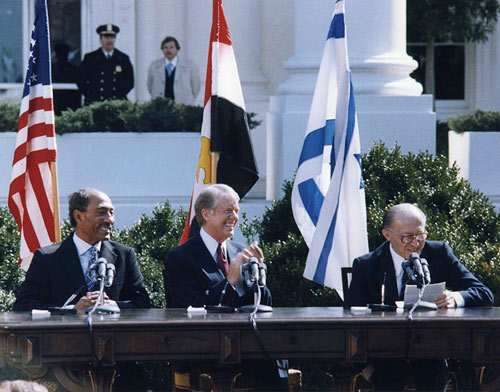
Professor Richard Falk is an International Law and International Relations Scholar who taught at Prinston University for 40 years. He is also the United Nations Special Rapporteur for Palestinian Rights under Israeli Military Occupation.
He has accepted this thankless job reporting in his Professorial style of writing, the facts on on an occupying power breaching International Law governing the rules for military governance of a people that lived on the land before it was captured in war. He is also Jewish, and the Jew Israelis love to hate.
I first learned of him a few years ago reading in the news about the Secretary-General of The United Nations and the US Ambassador to the UN wanting him fired from his voluntary UN position. Without knowing any of the details, my 1st thought was he must be doing something right. 
Upon further investigation I understood why some special  interests would want to silence this gentle, intelligent, lucid, insightful and reasonable Law Professor reporting Israeli violations of International Law without prejudice from the unbiased perspective of a Scholar in International Law.For those having the mind and patience to read, weigh and consider words, and the ideas and visions behind them, I think the Professor is right on in this analysis and presentation of the information in his latest post, and the Signs of the Times. I can only hope my mind will be as lucid, disciplined and organized as his is if I live to be 83 like Professor Richard Falk.
Polarization Doomed Egyptian Democracy
Prefatory Note: I realize that some of the readers of this blog are unhappy with long blogs, and so I offer an apology in advance. My attempt is to deal with a difficult set of issues afflicting the Middle East, especially the seemingly disastrous Egyptian experiment with democracy that has resulted in a bloody coup followed by violent repression of those elected to lead the country in free elections. The essay that follows discusses the degree to which anti-Muslim Brotherhood polarization in Egypt doomed the transition to democracy that was the hope and dream of the January 25th revolutionary moment in Tahrir Square that had sent shock waves of joy around the world!
**************************************************************************
When Polarization Becomes Worse than Authoritarianism Defer Democracy
Doubting Democracy
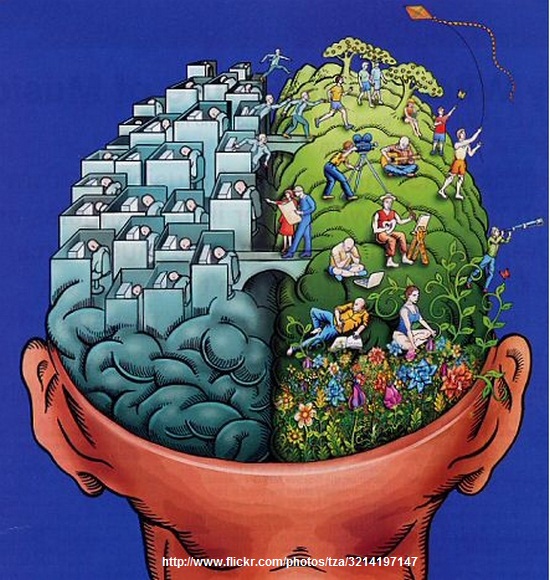 We are living at a time when tensions within societies seem far more disruptive and inhumane than the rivalries of sovereign states that have in the past fuelled international wars. More provocatively, we may be living at a historical moment when democracy as the government of choice gives rise to horrifying spectacles of violence and abuse. These difficulties with the practice of democracy are indirectly, and with a heavy dose of irony, legitimizing moderate forms of authoritarian government. After years of assuming that ‘democracy’ was ‘the least bad form of government’ for every national setting, there are ample reasons to raise doubts. I make such an observation with the greatest reluctance.
There is no doubt that authoritarian forms of rule generally constrain the freedom of everyone, and especially the politically inclined. Beyond this, there is a kind of stagnant cultural atmosphere that usually accompanies autocracy, but not always. Consider Elizabethan England, with Shakespeare and his cohort of contemporary literary giants. There have been critical moments of crisis in the past when society’s most respected thinkers blamed democracy for the political failings. In ancient Greece, the cradle of Western democracy, Plato, Aristotle, and Thucydides came to prefer non-democratic forms of government, more fearful of the politics of the mob than that led Athens into imprudent and costly foreign adventures.
Of course, there are times when the established order is fearful of democracy even in countries that pride themselves on their democratic character. Influential voices in the United States were raised during the latter stages of the Vietnam War in opposition to what were perceived by conservatives to be the excesses of democracy. Infamously, Samuel Huntington in an essay published by the influential Trilateral Commission compared the anti-war movement in the United States to the canine disorder known as ‘distemper,’ clearly expressing the view that the people should leave the matter of war and peace in the hands of the government, and not expect to change policy by demonstrating in the streets.
 It was only twenty years ago that the collapse of the Soviet Union was hailed throughout the West as an ideological triumph of liberal democracy over autocratic socialism. Prospects for world peace during this interval in
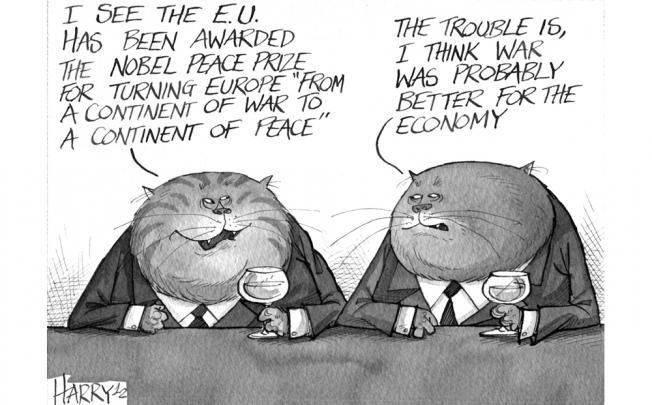 the 1990s were directly linked to the spread of democracy, while such other reformist projects as the strengthening of the UN or respecting international law were put aside. European and American universities were then much taken with the theory and practice of ‘democratic peace,’ documenting and exploring its central claim that democracies never go to war against one another. If such a thesis is sustained, it has significant policy implications. It would follow, then, that if more and more countries become ‘democratic’ the zone of peaceful international relations becomes enlarged. This encouraging byproduct of democracy for sovereign states was reinforced by the internal experience of the European Union, which while nurturing democracy established a culture of peace in what had for centuries been the world’s worst war zone.
This positive assessment of democratization at the national level is offset by the extent to which Western liberal democracies have recourse to war to promote regime change in illiberal societies. The motivations for such wars is not purely political, but needs to be linked to the imperatives of neoliberal globalization, and to the class interests of the 1%.
 In the post-9/11 period the Bush presidency embraced ‘democracy promotion’ as a major component of a neoconservative foreign policy for the United States in the Middle East. Skepticism about the nature such an endorsement of democracy was widespread, especially in the aftermath of the 2003 invasion of Iraq. Harsh criticism was directed U.S. Government self-appointed role as the agent of democratization in the region, especially considering the unacknowledged motivations: oil, regional hegemony, and Israeli security. By basing democracy promotion on military intervention, as in relation to Iraq, the American approach was completely discredited even without the admitted failure resulting from prolonged occupation of the country. The supposed anti-authoritarian interventions in Iraq, Afghanistan, and Libya have not implanted a robust democracy in any of these places, but rather corruption, chaos, massive displacement, and persisting violent conflict. Beyond this disillusioning experience, foreign leaders and world public opinion refused to accept Washington’s arrogant claim that it provided the world with the only acceptable political model of legitimate government.
Despite this push-back, there remains an almost universal acceptance of the desirability of some variation democracy as the only desirable form of national governance. Of course, there were profound disagreements when it comes to specific cases. There were some partial exceptions to the embrace of democracy. For instance, there was support in the Middle East for monarchies as sources of stability and unity, but even these monarchs purported to be ‘democratic’ in their sympathies unless directly challenged by their subjects/citizens. Democracies maintained their positive reputation by protecting citizens from abuse by the state, by empowering the people to confer authority on the national government, generally through periodic elections, and by developing a governing process that was respectful of the rule of law and human rights.
Issues during the last decade in the Middle East have brought these issues to the fore: the Green Revolution against theocratic democracy in Iran, the secular de facto rejection of majoritarian democracy in Turkey, and the various transitional scenarios that have unfolded in the Arab countries, especially Egypt, after the anti-authoritarian uprisings of 2011. The torments of the region, especially connected with the Anglo-French colonialist aftermath of the Ottoman Empire, followed by an American hegemonic regime tempered by the Cold War rivalry with the Soviet Union, and aggravated since the middle of the last century by the emergence of Israel, along with the ensuing conflict with the dispossessed Palestinian people, have made the struggle for what might be called ‘good governance’ a losing battle, at least until 2011. Against such a background it was only natural that the democratizing moment labeled ‘the Arab Spring’ generated such excitement throughout the region, and indeed in the world. Two years later, in light of developments in Syria, Egypt, Libya, and elsewhere it is an occasion that calls for sympathetic, yet critical, reflection.
In the last several years, there has emerged in the region the explosive idea that the citizenry enjoys an ultimate right to hold governments accountable, and if even a democratic government misplays its hand too badly,  then it can be removed from power even without awaiting of elections, and without relying on formal impeachment procedures. What makes this populist veto so controversial in recent experience is its tendency to enter a coalition with the most regressive elements of the governmental bureaucracy, especially the armed forces, police, and intelligence bureaucracies. Such coalitions are on their surface odd, bringing together the spontaneous rising of the often downtrodden multitude with the most coercive and privileged elements of state and private sector power.
The self-legitimizing claim heard in Tahrir Square 2013 was that only a military coup could save the revolution of 2011, but critics would draw a sharp distinction between the earlier populist uprising against a hated dictator and this latter movement orchestrated from above to dislodge from power a democratically elected leadership identified as Islamic, accused of being non-inclusive, and hence illegitimate.
The Arab Upheavals
The great movements of revolt in the Arab world in 2011 were justly celebrated as exhibiting an unexpected surge of brave anti-authoritarian populist politics that achieved relatively bloodless triumphs in Tunisia and Egypt, and shook the foundations of authoritarian rule throughout the region. Democracy seemed to be on the march in a region that had been written off by most Western experts as incapable of any form of governance that was not authoritarian, which was not displeasing to the West so long as oil flowed to the world market, Israel was secure, and radical tendencies kept in check. Arab political culture was interpreted through an Orientalizing lens that affirmed passivity of the citizenry and elite corruption backed up, if necessary, by a militarized state. In the background was the fear that if the people were able to give voice to their preferences, the end result might be the theocratic spread of Iranian style Islamism.
It is a sad commentary on the state of the world that only two years later a gloomy political atmosphere is creating severe doubts about the workability of democracy, and not only in the Arab world, but more widely. What has emerged is the realization that deep cleavages exist in the political culture that give rise to crises of legitimacy and governability that can be managed, if at all, only by the application of repressive force. These conflicts are destroying the prospects of effective and humane government in a series of countries throughout the world.
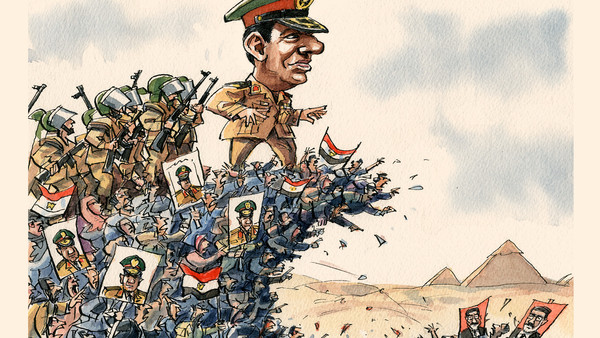 The dramatic and bloody atrocities in Egypt since the military takeover on July 3rd have brought these realities to the forefront of global political consciousness. But Egypt is not alone in experiencing toxic fallout from severe polarization that pits antagonistic religious, ethnic, and political forces against one another in ‘winner take all’ struggles. Daily sectarian violence between Sunnis and Shi’ia in Iraq make it evident that after an anguishing decade of occupation the American crusade to liberate the country from dictatorship has failed miserably. Instead of a fledging democracy America has left behind a legacy of chaos, the threat of civil war, and a growing belief that only a return to authoritarianism can bring stability to the country. Turkey, too, is enduring the destabilizing impact of polarization, which has persisted in the face of eleven years of extraordinary AKP success and energetic and extremely capable leadership periodically endorsed by the voting public: strengthening and civilianizing political institutions, weakening the military, improving the economy, and greatly enhancing the regional and international standing of the country. Polarization should not be treated as just a Middle Eastern phenomenon. The United States, too, is increasingly afflicted by a polarizing struggle between its two main political parties that has made democratic government that humanely serves the citizenry and the national public good a thing of the past. Of course, this disturbing de-democratizing trend in America owes much to the monetizing machinations of Wall Street and the spinning of 9/11 as a continuing security challenge that requires the government to view everyone, everywhere, including its own citizens, as potential terrorist suspects.
The nature of polarization is diverse and complex, reflecting context. It can be socially constructed around the split between religion and secularism as in Egypt or Turkey or in relation to divisions internal to a religion as 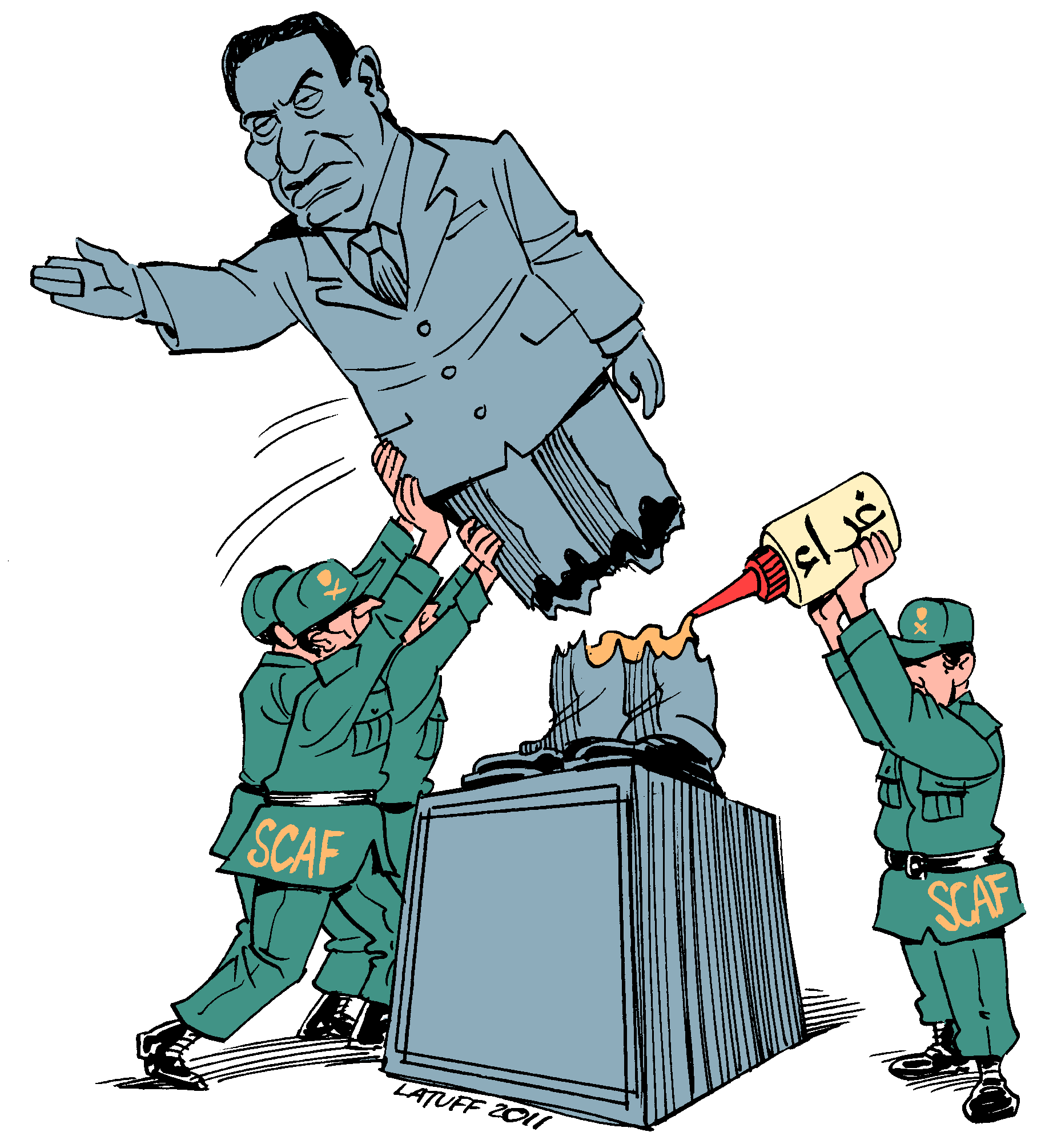 in Iraq or as between classes, ethnicities, political parties, geographic regions. In the concreteness of history each case of polarization has its own defining set of circumstances, often highlighting minority fears of discrimination and marginalization, class warfare, ethnic and religious rivalry (e.g. Kurdish self-determination), and conflicting claims about natural resources. Also, as in the Middle East, polarization is not merely the play domestic forces struggling for ascendancy. Polarization is also being manipulated by powerful external political actors, to what precise extent and to what ends is unknowable. It is revealing that in the demonstrations in Cairo during the past month both pro- and anti-Morsi protesters have been chanting anti-American slogans, while the government invites a series of Western dignitaries with the aim of persuading the leadership of the Muslim Brotherhood to accept the outcome of the coup.
Egypt and Turkey
The circumstances of polarization in Egypt and Turkey, although vastly different, share the experience of Islamic oriented political forces emerging from the shadow land of society after years of marginalization, and in Egypt’s case brutal suppression. In both countries the armed forces had long played an important role in keeping the state under the rigid control of secular elites that served Western strategic and neoliberal economic interests. Up to now, despite periodic trials and tribulations, Turkey seems to have solved the riddle of modernity much more persuasively than Egypt.
In both countries electoral politics mandated radical power shifts unacceptable to displaced secular elites. Opposition forces in the two countries after enjoying decades of power and influence suddenly saw themselves displaced by democratic means with no credible prospect of regaining political dominance by success in future elections, having ceded power and influence to those who had previously been subjugated and exploited. Those displaced were unwilling to accept their diminished role, including this lowered status in relation to societal forces whose values were scorned as anti-modern and threatening to preferred life styles that were identified with ‘freedom.’ They complained bitterly, organized feverishly, and mobilized energetically to cancel the verdict of the political majority by whatever means possible.
Recourse to extra-democratic means to regain power, wealth, and influence seemed to many in the opposition, although not all, the only viable political option, but it had to be done in such a way that it seemed to be a ‘democratic’ outcry of the citizenry against the state. Of course, the state has its own share of responsibility for the traumas of polarization. The elected leadership often over-reacts, becomes intoxicated with its own majoritarian mandate, acts toward the opposition on the basis of worst case scenarios, adopts paranoid styles of response to legitimate grievances and criticisms, and contributes its part to a downward spiral of distrust and animosity. The media, either to accentuate the drama of conflict or because is itself often aligned with the secular opposition, tends to heighten tensions, creating a fatalist atmosphere of ‘no return’ for which the only possible solution is ‘us’ or ‘them.’ Such a mentality of war is an anathema for genuine democracy in which losers at any given moment still have a large stake in the viability and success of the governing process. When that faith in the justice and legitimacy of the prevailing political system is shattered democracy cannot generate good governance.
The Politics of Polarization
 The opposition waits for some mistake by the governing leadership to launch its campaign of escalating demands. Polarization intensifies. The opposition is unwilling to treat the verdict of free elections as the final word as to an entitlement to govern. At first, such unwillingness is exhibited by extreme alienation and embittered fears. Later on, as opportunities for obstruction arise, this unwillingness is translated into political action, and if it gathers enough momentum, the desired crises of legitimacy and governability bring the country to the brink of collapse. Much depends on material conditions. If the economy is doing reasonably well, calmer heads usually prevail, which may help explain why the impact of severe polarization has been so much greater in Egypt than Turkey. Morsi has succumbed to the challenge, while Erdogan has survived. Reverse the economic conditions, and the political outcomes would also likely have been reversed, although such a possibility is purely conjectural.
The Egyptian experience also reflects the extraordinary sequence of recent happenings. The Tahrir Square upheavals of January 25th came after 30 years of Mubarak rule. A political vacuum was created by the removal of Mubarak that was quickly filled by the Supreme Council of the Armed Forces (SCAP), but accompanied by the promise that a transition to democracy was the consensus goal binding all Egyptians, and once reached the generals would retire from the political scene. The popular sentiment then favored an inclusive democracy, which in 2011, was a coded way of saying that the Muslim Brotherhood should henceforth participate in the political process, finally being allowed to compete for a place in the governing process after decades of exclusion. There were from the beginning anxieties about this prospect among many in the anti-Mubarak ranks, and the Brotherhood seemed at first sensitive to secular and Coptic concerns even pledging that it had no intention of competing for the presidency of Egypt. All seemed well and good, with popular expectations wrongly assuming that the next president of Egypt would be a familiar secular figure, almost certainly drawn from the renegade membership of the fuloul, that is, a former beneficiary of the regime who joined the anti-Mubarak forces during the uprising. In the spring of 2011 the expectations were that Amr Moussa (former Secretary General of the Arab League and Mubarak Foreign Minister) would become Egypt’s first democratically elected president and that the Muslim Brotherhood would function as a strong, but minority, force in the Egyptian parliament. As the parliament would draft a new constitution for the country, this was likely to be the first show of strength between the secular and religious poles of Egyptian political opinion.
Several unforeseen developments made this initial set of expectations about Egypt’s political future unrealized. Above all, the Muslim Brotherhood was far more successful in the parliamentary elections than had been  anticipated. These results stoked the fears of the secularists and Copts, especially when account was taken of the previously unappreciated political strength of several Salafi parties that had not previously shown any interest in participating in the government. Religiously oriented political parties won more than 70% of the contested seats, creating control over the constitution-making process. This situation was further stressed when the Brotherhood withdrew its pledge not to seek control of the government by fielding its own candidate for the presidency. This whole transition process after January 2011 was presided over by administrative entities answerable to SCAP. Several popular candidates were disqualified, and a two-stage presidential election was organized in 2012 in which Mohamed Morsi narrowly defeated Ahmed Shafik in the runoff election between the two top candidates in the initial vote. Shafik, an air force commander and the last Mubarak prime minister, epitomizing the persisting influence of the fuloul. In a sense, the electoral choice given to the Egyptian people involved none of the Egyptian revolutionary forces that were most responsible for the overthrow of Mubarak or representing the ideals that seemed to inspire most of those who filled Tahrir Square in the revolutionary days of January 2011. The Brotherhood supported the anti-Mubarak movement only belatedly when its victory was in sight, and seemed ideologically inclined to doubt the benefits of inclusive democratization, while Shafik, epitomizing the fuloul resurgent remnant of Mubarakism, never supported the upheaval, and did not even pretend to be a democrat, premising his appeal on promises to restore law and order, which would then supposedly allow Egypt to experience a rapid much needed economic recovery.
It was during the single year of Morsi’s presidency that the politics of extreme polarization took center stage. It is widely agreed that Morsi was neither experienced nor adept as a political leader in what was a very challenging situation even if polarization had not been present to aggravate the situation. The Egyptian people anxiously expected the new leadership to restore economic normalcy after the recent period of prolonged disorder and decline. He was a disappointment, even to many of those who had voted for him, in all of these regards. Many Egyptians who said that they had voted for Morsi expressed their disenchantment by alleging the ‘nothing had changed for the better since the Mubarak period,’ and so they joined the opposition.
 It was also expected that Morsi would immediately signal a strong commitment to social justice and to addressing the plight of Egyptian unemployed youth and subsistence masses, but no such promise was forthcoming. In fairness, it seemed doubtful that anyone could have succeeded in fulfilling the role of president of Egypt in a manner that would have satisfied the majority of Egyptians. The challenges were too obdurate, the citizenry too impatient, and the old Mubarak bureaucracy remained strategically in place and determined to oppose any change that might enhance the reputation of the Morsi leadership. Mubarak and some close advisors had been eliminated from the government, but the judiciary, the armed forces, and the Ministry of Interior were fuloul activist strongholds. In effect, the old secularized elites were still powerful, unaccountable, and capable of undermining the elected government that officially reflected the political will of the Egyptian majority. Morsi, a candidate with admittedly mediocre credentials, was elected to the presidency by an ominously narrow margin, and to make matters worse he inherited a mission impossible. Yet to unseat him by a coup was to upend Egypt’s fledgling democracy, with currently no hopeful tomorrow in view.
The Authoritarian Temptation
What was surprising, and disturbing, was the degree to which the protest movement so quickly and submissively linked the future of Egypt to the good faith and prudent judgment of the armed forces. All protest forces have received in exchange was the forcible removal of Morsi, the renewal of a suppressive approach to the Brotherhood, and some rather worthless reassurances about the short-term nature of military rule. General Adel-Fattah el-Sisi from the start made it clear that he was in charge, although designating an interim president, Adly Mansour, a Mubarak careerist, who had only days before the coup been made chief judge of the Supreme Constitutional Court by Morsi’s own appointment. Mansour has picked a new prime minister who selected a cabinet, supposedly consisting of technocrats, who will serve until a new government is elected. Already, several members of this civilian gloss on a military takeover of the governing process in Egypt have registered meek complaints about the excessive force being used against pro-Morsi demonstrations, itself a euphemism for crimes against humanity and police atrocities.
Better Mubarakism than Morsiism was the underlying sentiment relied upon to fan the flames of discontent throughout the country, climaxing with the petition campaign organized by Tamarod, a newly formed youth-led 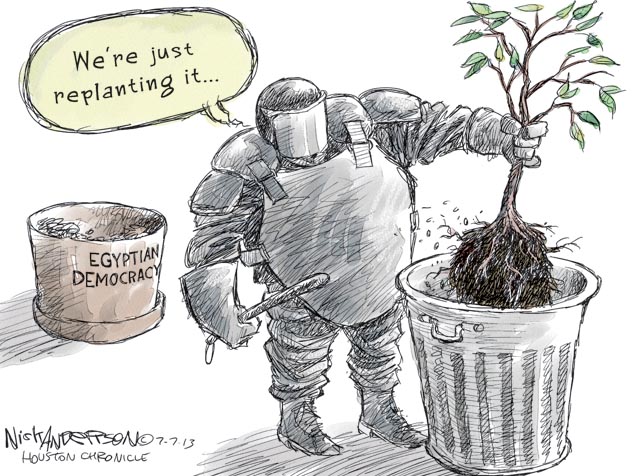 opposition, that played a major role in organizing the June 30th demonstrations of millions that were underpinned in the final days by a Sisi ultamatum from the armed forces that led to the detention and arrest of Morsi,. This was followed by the rise to political dominance of a menacing figure, General Adel-Fattah el-Sisi, who has led a military coup that talks of compromise and inclusive democracy while acting to criminalize the Muslim Brotherhood, and its leadership, using an onslaught of violence against those who peacefully refuse to fall into line. This military leadership is already responsible for the deliberate slaughter of Morsi loyalists in coldblooded tactics designed to terrorize the Muslim Brotherhood, and warn the Egyptian people that further opposition will not be tolerated.
I am certainly not suggesting that such a return to authoritarianism in this form is better for Egypt than the democracy established by Morsi, or favored by such secular liberals as Mohamed ElBaradei, who is now serving as Deputy Prime Minister. Unfortunately, this challenge directed at a freely elected democracy by a massive popular mobilization to be effective required an alliance with the coercive elements drawn from the deep state and private sector entrepreneurs. Such a dependency relationship involved a Faustian Bargain, getting rid of the hated Morsi presidency, but doing so with an eyes closed acceptance of state terror: large-scale shooting of unarmed pro-Morsi demonstrators, double standards dramatized by General Sisi’s call to the anti-Morsi forces to give him a populist mandate to crush the Brotherhood by coming into the streets aggressively and massively. Egypt is well along a path that leads to demonic autocratic rule that will likely be needed to keep the Brotherhood from preventing the reestablishment of order. General Sisi’s coup will be written off as a failure if there continues to be substantial street challenges and bloody incidents, which would surely interfere with restoring the kind of economic stability that Egypt desperately needs in coming months if it is to escape the dire destiny of being ‘a failed state.’ The legitimating test for the Sisi coup is ‘order’ not ‘democracy,’ and so the authoritarian ethos prevails, yet if this means a continuing series of atrocities, it will surely lead to yet another crisis of legitimacy for the country that is likely to provoke a further crisis of governability.
 The controversial side of my argument is that Egypt currently lacks the political preconditions for the establishment of democracy, and in such circumstances, the premature attempt to democratize the political life of the country leads not only to disappointment, but to political regression. At this stage, Egypt will be fortunate if it can return to the relatively stable authoritarianism of the Mubarak dictatorship. Because of changed expectations, and the unlawful displacement of the Morsi leadership, it has now become respectable for the Tamarod, self-appointed guardians of the Tahrir Square revolution to support the ‘cleansing’ the Muslim Brotherhood. It is sad to take note of these noxious odors of fascism and genocide now contaminating the political atmosphere in Egypt.
The very different experience in Iraq, too, suggests that ill-advised moves to install democracy can unleash polarization in a destructive form. Despite his crimes, polarization had been kept in check during the authoritarian rule of Saddam Hussein, The attempted transition to democracy was deeply compromised by coinciding with the American occupation and proconsular rule. It produced sectarian polarization in such drastic forms that it will likely either lead to a new authoritarianism that is even more oppressive than what Saddam Hussein had imposed or resolved by a civil war in which the victor rules with an iron hand and the loser is relegated to the silent margins of Iraqi political life.
In the post-colonial world it is up to the people of each country to shape their own destiny (realizing the ethos of self-determination), and outsiders should rarely interfere however terrible the civil strife. Hopefully, the  peoples of the Middle East will learn from these polarization experiences to be wary of entrusting the future of their country to the vagaries of majoritarian democracy, but also resistant to moves by politically displaced minorities to plot their return to power by a reliance on anti-democratic tactics, coalitions with the military, and the complicity of the deep state. There is no single template. Turkey, although threatened by polarization, has been able so far to contain its most dire threats to political democracy. Egypt has not been so lucky. For simplistic comparison, Turkey has had the benefits of a largely evolutionary process that allows for a democratic political culture to take hold gradually at societal and governmental levels. Egypt has, in contrast, experienced abrupt changes in a setting of widespread economic distress, and a radical form of polarization that denied all legitimacy to the antagonist, transforming the armed forces from foe to friend of the opposition because it was the enemy of their enemy. If this is the predictable outcome of moves to establish democracy, then authoritarian leadership may not be the worst of all possible worlds in every circumstance. It depends on context. In the Middle East this may require a comparison of the risks of democratization with the costs of authoritarianism, and this may depend on the degree and nature of polarization.
 The presence of the oil reserves in the Gulf, as well as Iran, Iraq, and Libya, along with Israel’s interest in avoiding the emergence of strong unified democratic states in the region makes the Middle East particularly vulnerable to the perils of polarization. In other regions similar structures of antagonism exist, but generally with less disastrous results. The dynamics of economic globalization cannot be divorced from the ways in which nominally independent sovereign states are subjected to the manipulative storms of geopolitics.